不用 do、does、did 的英语问句怎么判断?别先盯着 what、why 或中文的“吗”。先看句子里有没有已经能提到主语前的词:be、情态动词、完成时的 have/has/had;再看 who/what 是不是动作的主体。只有这两关都没出现时,普通动作的一般现在时或一般过去时问句,才用 do、does 或 did。
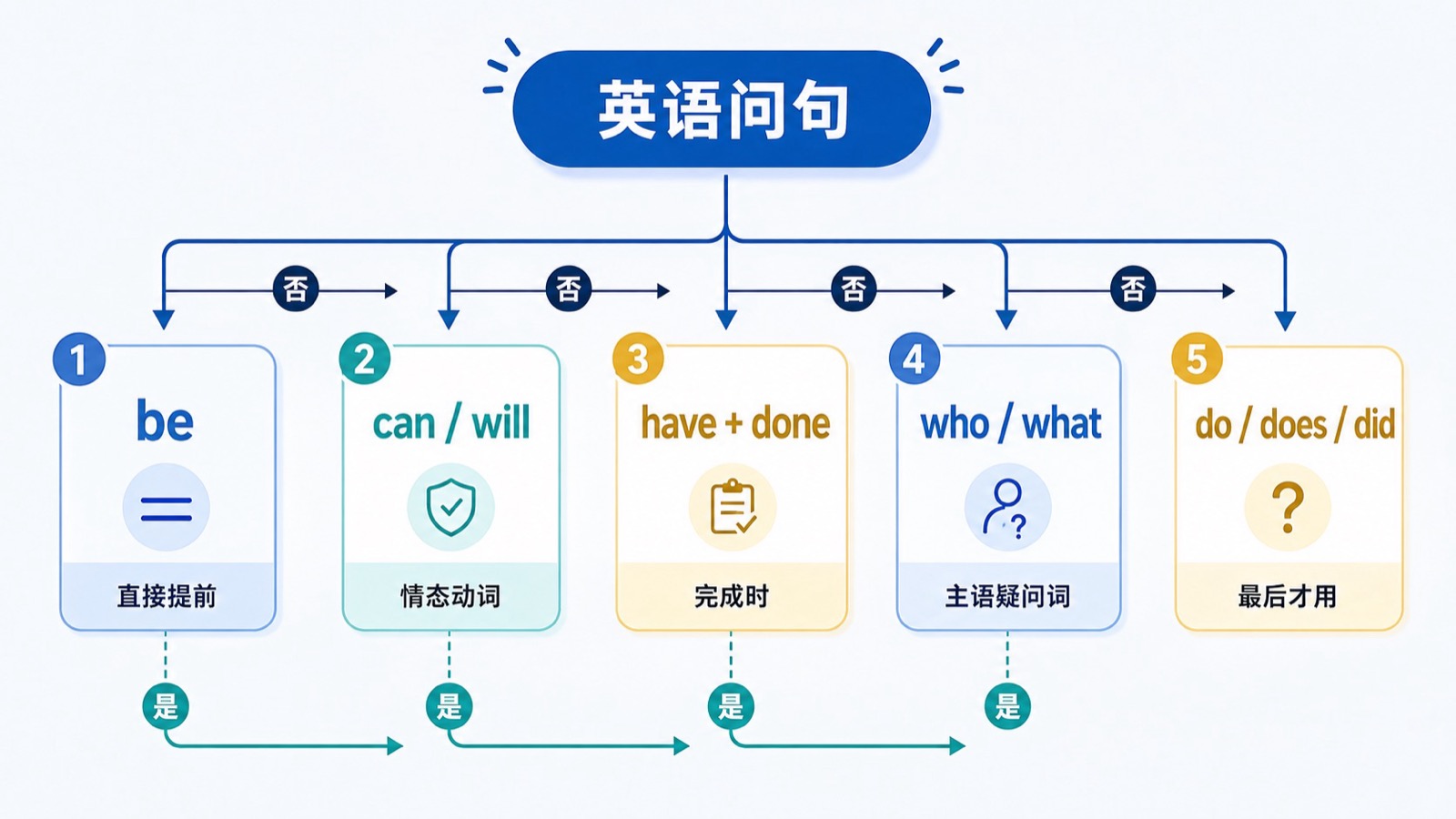
先用这张判断表,不要靠“问句就加 do”
| 你先看到什么 | 问句怎么开头 | 例句 | 不要这样写 |
|---|---|---|---|
am / is / are / was / were | 直接提前 be 动词 | Is she tired? | Does she be tired? |
can / will / should 等情态动词 | 直接提前情态动词 | Can he swim? | Does he can swim? |
have / has / had + 过去分词 | 直接提前 have/has/had | Have you finished? | Do you have finished? |
who / what 自己做动作 | 疑问词后直接接动词 | Who called? | Who did call? |
| 普通动作,且以上都不是 | 用 do/does/did | What does she want? | What she wants? |
核心不是背五张表,而是找一句话里谁已经承担了“提问的帮手”这个角色。已经有帮手,就把它提前;没有帮手,才请 do、does、did 来帮忙。
第 1 步:有 be 动词,直接把 be 提前
be 动词本身就能构成问句。陈述句 She is tired. 变问句时,把 is 放到主语 she 前面:
She is tired.
Is she tired?

They were at home.
Were they at home?
British Council 的 be 动词问句说明也是这个顺序:am / is / are 和人称调换位置,不再额外加 do 或 does。查看规则与例句
所以看到“是、在、很……”这类状态时,先检查英语谓语是不是 be:
Why is he late?
他为什么迟到?

What is that sour smell?
那股酸味是什么?

Were you tired last night?
你昨晚累吗?
不要因为句子以 why 或 what 开头,就把 do 塞进去:
Wrong: Why does he is late?
Right: Why is he late?

Wrong: What does that sour smell is?
Right: What is that sour smell?
第 2 步:有 can、will、should,直接把它们提前
can、will、should、might 这类情态动词,也已经能带出问句。它们后面接动词原形,但不需要 do、does 或 did 再来一次。
He can swim.
Can he swim?

You should leave now.
Should you leave now?

They will come tomorrow.
Will they come tomorrow?
Cambridge Grammar Today 把这类错误单独标出来:有情态动词时,不用辅助 do 来提问。查看说明
Wrong: Does he can swim?
Right: Can he swim?

Wrong: Do you will be here?
Right: Will you be here?
这里的快速判断很实用:只要你已经写出了 can / will / should,就别再找 do。
第 3 步:完成时里有 have、has、had,就提它
完成时的 have / has / had 后面会跟过去分词,例如 finished、seen、gone。这时它已经是助动词,问句直接把它放到主语前:
You have finished the work.
Have you finished the work?

She has seen the message.
Has she seen the message?

They had left before noon.
Had they left before noon?
不要把完成时拆坏:
Wrong: Do you have finished the work?
Right: Have you finished the work?
但 have 并不总是完成时。它表示“拥有”时,对初学者而言,最稳的普通问法是 Do you have ...?
Do you have a pen?
你有笔吗?

Have you finished the report?
你已经完成报告了吗?
第一句的 have 是主要动词“有”,第二句的 have 后面接过去分词 finished,是完成时助动词。不要只看见 have 就机械套一种问法。
第 4 步:who 或 what 自己做动作时,不用 do/did
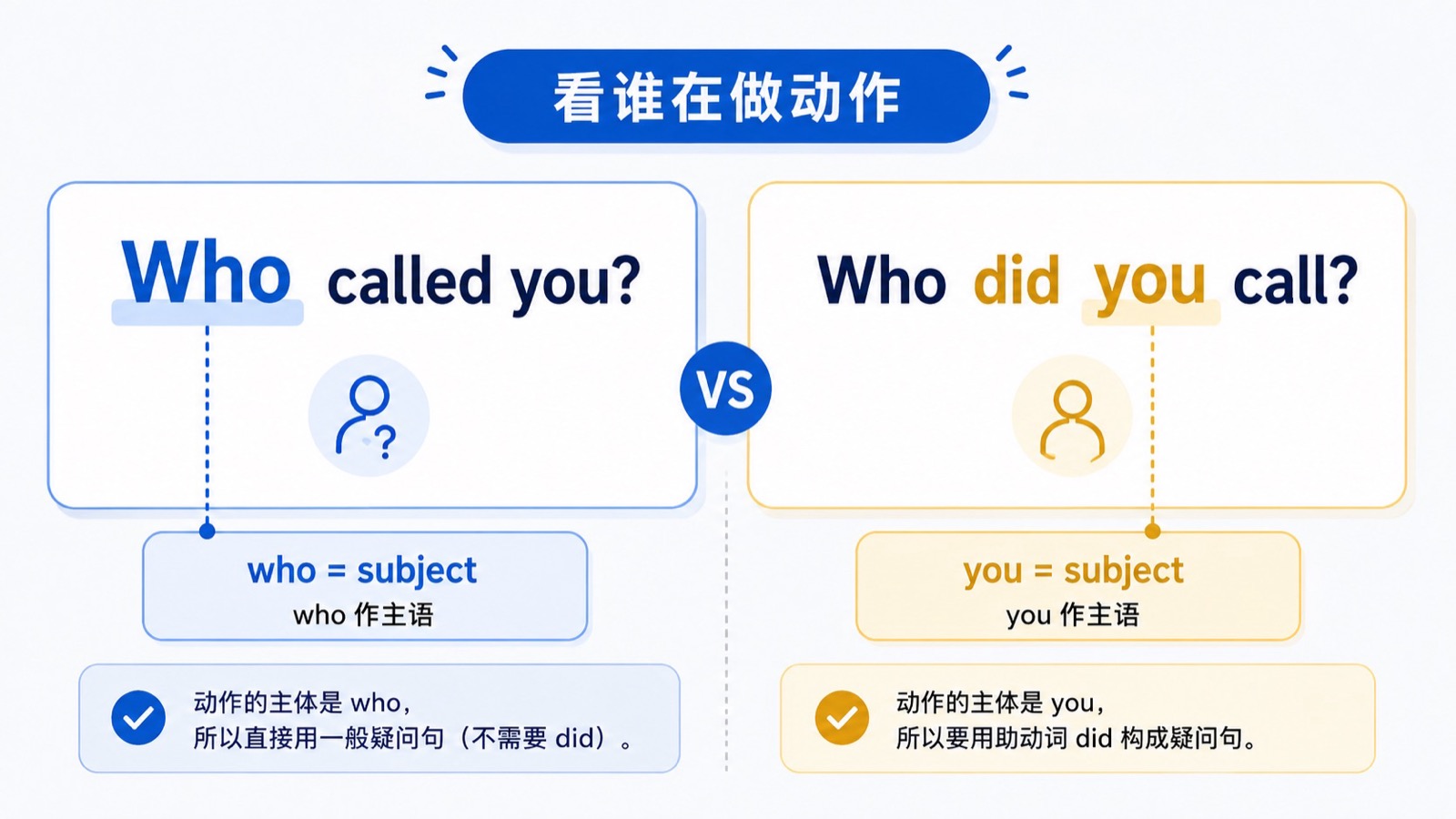
who、what 开头并不自动决定要不要 do。关键在于它们在句子里问的是“谁做了动作”,还是“谁或什么被动作影响”。
who/what 是动作的主体
如果你问“谁打电话了”“什么发生了”,who/what 就是动作的主体。后面直接接动词,不用 do 或 did:
Who called you?
谁给你打电话了?

What happened?
发生什么事了?

Who lives next door?
谁住在隔壁?
British Council 在 question forms 中把这种情况称为 subject question:疑问词自己是主语时,不做通常的主谓倒装。查看 subject question 说明
Wrong: Who did call you?
Right: Who called you?

Wrong: What did happened?
Right: What happened?
Who did call you? 在非常强调“到底是谁打的”时可能出现,但它不是初学者判断普通问句的默认结构。
who/what 不是动作主体
如果后面已经有 you、she、they 这类主语,who/what 往往是在问宾语或补足信息。这时回到第 5 类,普通动作就需要 do/does/did:
Who did you call?
你给谁打电话了?

What does she want?
她想要什么?

What did they buy yesterday?
他们昨天买了什么?
对比这两组:
| 句子 | 谁在做动作 | 要不要 do/did |
|---|---|---|
Who called you? | who 打电话 | 不用 |
Who did you call? | you 打电话 | 用 did |
What happened? | what 发生 | 不用 |
What did they buy? | they 买 | 用 did |
 |
最后才用 do、does、did:普通动作的问句
如果句子是一般现在时或一般过去时的普通动作,没有 be、情态动词或完成时助动词,而且 who/what 也不是主语,就用 do/does/did。
Do you like coffee?
你喜欢咖啡吗?

Does she work here?
她在这里工作吗?

Did they arrive on time?
他们准时到了吗?
British Council 对一般现在时的说明指出,普通动词的问句用 do/does,而过去时对应 did。查看一般现在时问句规则
这时还有一个常见错误:does 和 did 已经带了时态,后面的主要动词回到原形。
Wrong: Does she works here?
Right: Does she work here?

Wrong: Did they arrived on time?
Right: Did they arrive on time?
即使主要动词刚好也叫 do,规则也不变:
Do you do yoga?
你练瑜伽吗?

What does he do after work?
他下班后做什么?
前一个 do/does 是提问的助动词,后一个 do 才是“做”的主要动词。
用 10 秒完成一次判断
下次想造英语问句,可以按这个顺序自问:
- 谓语是不是
be?是,就提前am/is/are/was/were。 - 有没有
can/will/should等情态动词?有,就提前它。 - 是不是
have/has/had + 过去分词的完成时?是,就提前 have/has/had。 who/what是不是自己做动作?是,就让它后面直接接动词。- 都不是,才在普通动作前加
do/does/did。
如果你已经能写出一句问句,把它放进 Video Language Learn 做单句循环:先盲听问句,第二遍确认最前面的“提问帮手”,第三遍替换主语和场景。这样练的不是一张死表,而是看到句子就能做出的判断。
相关练习
- 想专门练过去动作问句,可继续看 Did you 过去式问句怎么用。
- 想练
are/is开头的现在进行时问句,可继续看 Are you waiting for 现在进行时问句怎么用。 - 想分清外层问句和内层从句语序,可继续看 Do you know what 从句问句怎么用。
参考资料
- British Council LearnEnglish: Present simple with be
- Cambridge Grammar: Do
- British Council LearnEnglish: Question forms
- British Council LearnEnglish: Present simple
Practice Next
用真实视频练一次这个知识点
读懂规则后,选一段真实英文视频,把这个表达放回声音、字幕、跟读和听写里,才更容易变成主动表达。