“楼下那个男人是谁?”最稳的说法是:Who is the man downstairs? 口语里可以说 Who's the man downstairs?。不要先从中文里找“楼下”,先问未知身份 Who,再放 is,再放你要问的人 the man,最后用 downstairs 说明这个人在哪里。
先记住这个完整句子
Who is the man downstairs?
楼下那个男人是谁?

Who's the man downstairs?
楼下那个男人是谁?
这句话不是问“那个男人在哪里”,而是问“那个男人是谁”。所以开头应该是 Who,不是 Where。
真正要记的是这个顺序:
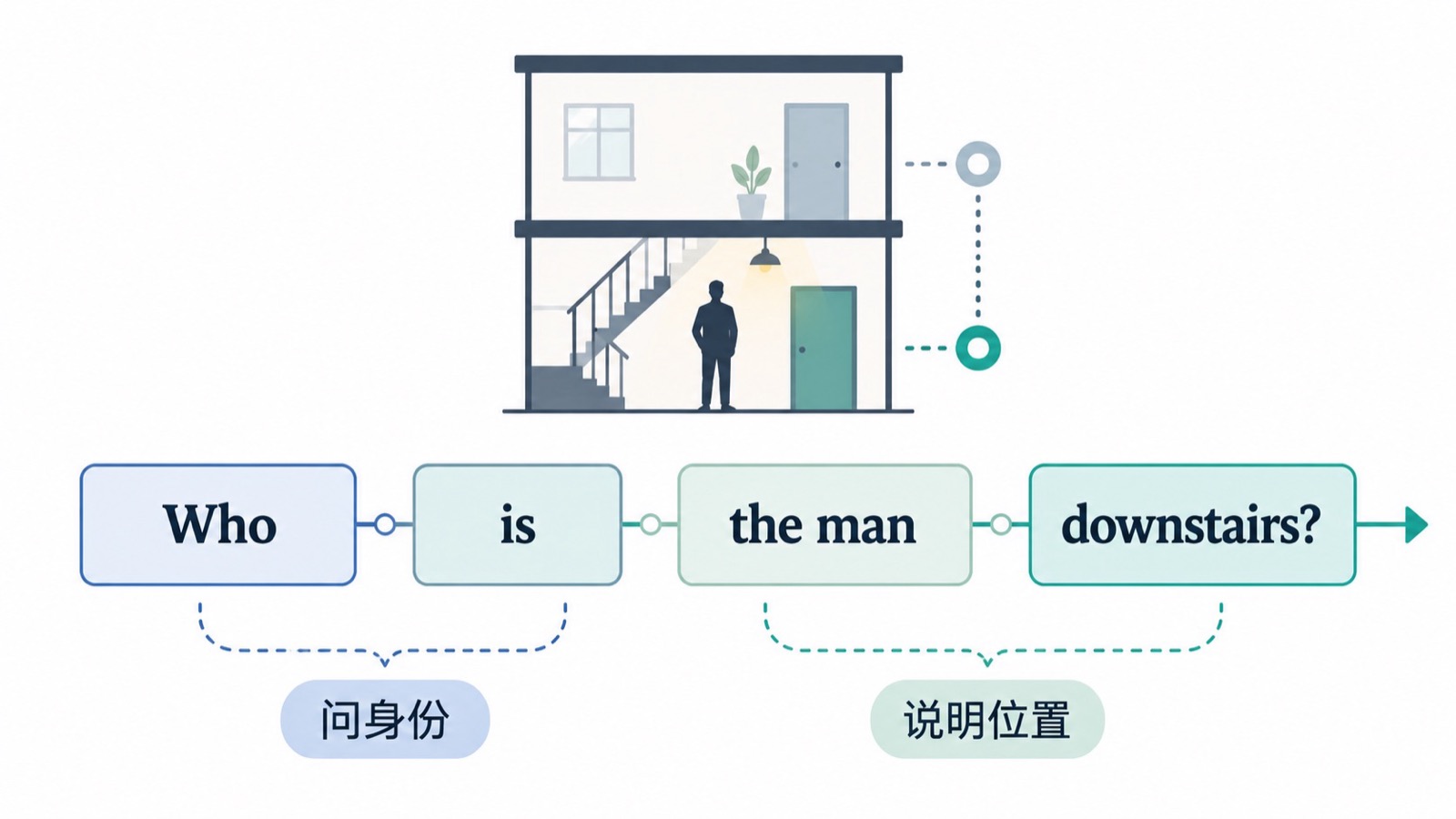
Who + is + the man + downstairs?
谁 + 是 + 那个男人 + 楼下?
中文会先说“楼下”,但英语不一定先处理地点。你要先判断自己到底在问什么信息。
3 步排出 Who is the man downstairs
第 1 步,先找未知信息,是 who
“楼下那个男人是谁?”里,未知信息不是地点,而是身份。
你知道有一个人在楼下,但不知道他是谁,所以先放:
Who ...Cambridge Grammar Today 的 wh-question 讲解里,who、what、where 这类疑问词用来询问信息。这里要问人的身份,就用 who。
第 2 步,用 is 连接 who 和 the man
这句话的核心不是动作,而是“这个人是谁”。所以用 be 动词:
Who is ...British Council 的 present simple: to be 页面说明,be 动词问句会把 am / is / are 放到主语前,带疑问词时疑问词放在开头。它给出的同类结构是 Who's she?。
所以这里不是:
Wrong: Who the man downstairs is?
Right: Who is the man downstairs?
Who the man downstairs is 可以出现在从句里,比如 I don't know who the man downstairs is. 但它不是直接提问时最自然的词序。
第 3 步,把 the man downstairs 当成“你要问的那个人”
the man downstairs 是一个整体,意思是“楼下那个男人”。
Who is + the man downstairs?the man 先告诉对方你在说一个具体男人,downstairs 再补充位置,帮对方锁定是哪一个人。
the man downstairs 里的 downstairs 放哪里
downstairs 可以作副词,意思是“在楼下 / 到楼下”。Cambridge Dictionary 对 downstairs 的解释就是 “to or on a lower floor of a building”,并给出 I hear someone downstairs. 这类例子。
所以 the man downstairs 可以理解成:
the man downstairs
楼下那个男人
它不是把 downstairs 当成职业、身份或名字,而是在说明位置。
对比一下:
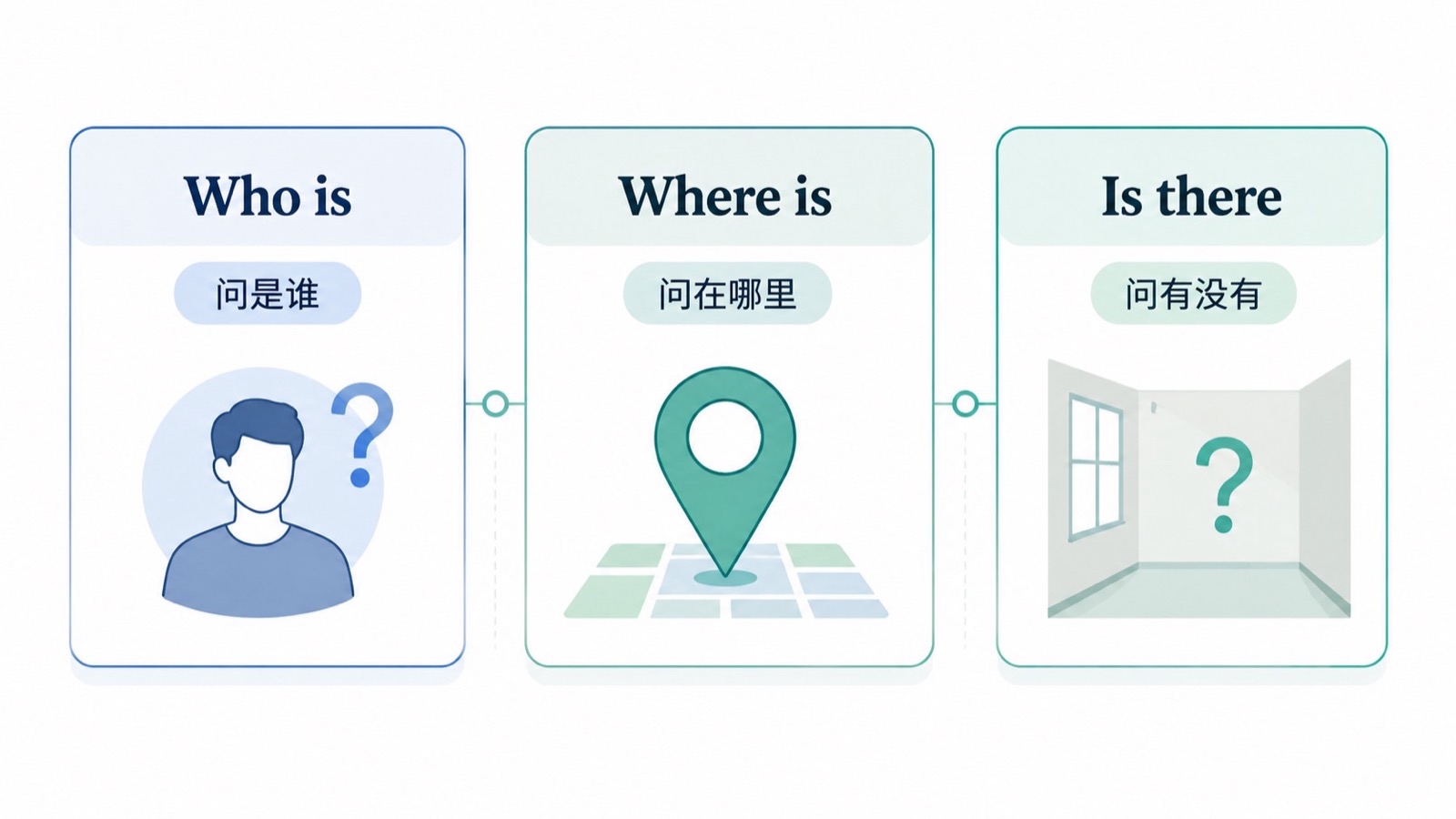
| 中文意思 | 更自然的英文 | 重点 |
|---|---|---|
| 楼下那个男人是谁? | Who is the man downstairs? | 问身份 |
| 那个男人在楼下吗? | Is the man downstairs? | 问是否在楼下 |
| 那个男人在哪里? | Where is the man? | 问位置 |
| 楼下有人吗? | Is there anyone downstairs? | 问是否有人 |
你搜索这句时,最容易错的不是 downstairs 这个词,而是把“楼下”先放到脑子最前面,导致问句目标跑偏。
为什么用 the man,不是 a man
man 是可数名词,表示成年男性。the man 里的 the 让它变成一个具体的人,通常是说话人和听话人都能通过场景识别的那个人。
Cambridge Grammar Today 对 a/an 和 the 的讲解里说,the 会让名词变得具体,表示说话人和听话人知道指的是哪一个。
所以这句中文里的“那个男人”,更适合:
the man downstairs
楼下那个男人
如果你只是说“楼下有一个男人”,第一次提到、对方还不知道是谁,可以说:
There is a man downstairs.
楼下有个男人。
接着再问身份,就自然变成:
Who is the man downstairs?
楼下那个男人是谁?
不要把它写成这 4 种错误
错误 1:Who the man downstairs is?
这是中文顺序影响出来的错误。直接问句要说:
Right: Who is the man downstairs?如果放进从句,才可以说:
I don't know who the man downstairs is.
我不知道楼下那个男人是谁。
错误 2:Where is the man downstairs?
where 问地点,不问身份。如果你想问“那个男人在哪里”,可以说:
Where is the man?但“楼下那个男人是谁”问的是人是谁,所以要用 who。
错误 3:Who is downstairs the man?
downstairs 不要硬插在 is 后面。the man downstairs 是一个整体,先说人,再补位置。
错误 4:Who is the downstairs man?
这句不是完全不能出现,但重点变了。downstairs man 听起来像用 downstairs 当形容词修饰 man,不如 the man downstairs 自然。
你可以说 a downstairs bathroom,因为那是在说“楼下的浴室”这个房间类型。但问一个具体的人时,the man downstairs 更清楚。
8 个同类句子,直接替换练
先保留这个框架:
Who is + the person + place?然后替换人和地点:
Who is the woman upstairs?
楼上那个女人是谁?

Who is the girl outside?
外面那个女孩是谁?

Who is the boy at the door?
门口那个男孩是谁?

Who is the man in the kitchen?
厨房里的那个男人是谁?

Who is the woman in the photo?
照片里的那个女人是谁?

Who is the guy next to your brother?
你哥哥旁边那个人是谁?

Who is the person behind you?
你后面那个人是谁?

Who is the teacher in this video?
这个视频里的老师是谁?
这里有两个练习重点:
第一,who 负责问身份,不要被地点词带跑。
第二,地点短语放在人后面,帮你说明“哪个人”。
和 Who’s that man downstairs 有什么区别
Who is the man downstairs? 和 Who's that man downstairs? 都能表达“楼下那个男人是谁”,但语气略不同。
| 句子 | 更适合的场景 |
|---|---|
| Who is the man downstairs? | 你和对方都知道楼下有这么一个男人,只是不知道身份 |
| Who’s that man downstairs? | 你看到或刚注意到那个人,语气更像“那个人是谁” |
| Who is he? | 已经明确说的是哪个人,不需要再补 downstairs |
如果你只是练基础问句,先把 Who is the man downstairs? 练熟。等你能自然说出来,再根据场景换成 that man、the woman、the person。
怎么用 Video Language Learn 练到开口
这类句子只看懂还不够,真正的难点是在开口时不被中文顺序带偏。你可以把同类问句放进 Video Language Learn 里做三轮练习。
第一轮,逐句精听。只听 Who is... 的开头,确认自己能先抓到疑问词和 be 动词。
第二轮,单句循环跟读。反复读:
Who is the man downstairs?
Who's the man downstairs?
第三轮,替换地点和人物。把 the man downstairs 换成 the woman upstairs、the boy at the door、the person behind you。你练的不是一个单句,而是“问人身份”的口语槽位。
小结
who is the man downstairs 怎么说,答案是:
Who is the man downstairs?
Who's the man downstairs?
别先翻“楼下”,先判断你问的是谁。直接问句顺序是 Who + is + the man + downstairs?。downstairs 在这里说明位置,放在 the man 后面更自然。学会这一句以后,你可以把地点换成 upstairs、outside、at the door、in the kitchen,继续练同类问人句子。
Practice Next
把这套方法放进一个真实视频里练
学习指南的价值不在收藏,而在马上完成一次训练。选一集真实英文视频,从盲听、逐句精听、跟读或听写开始。