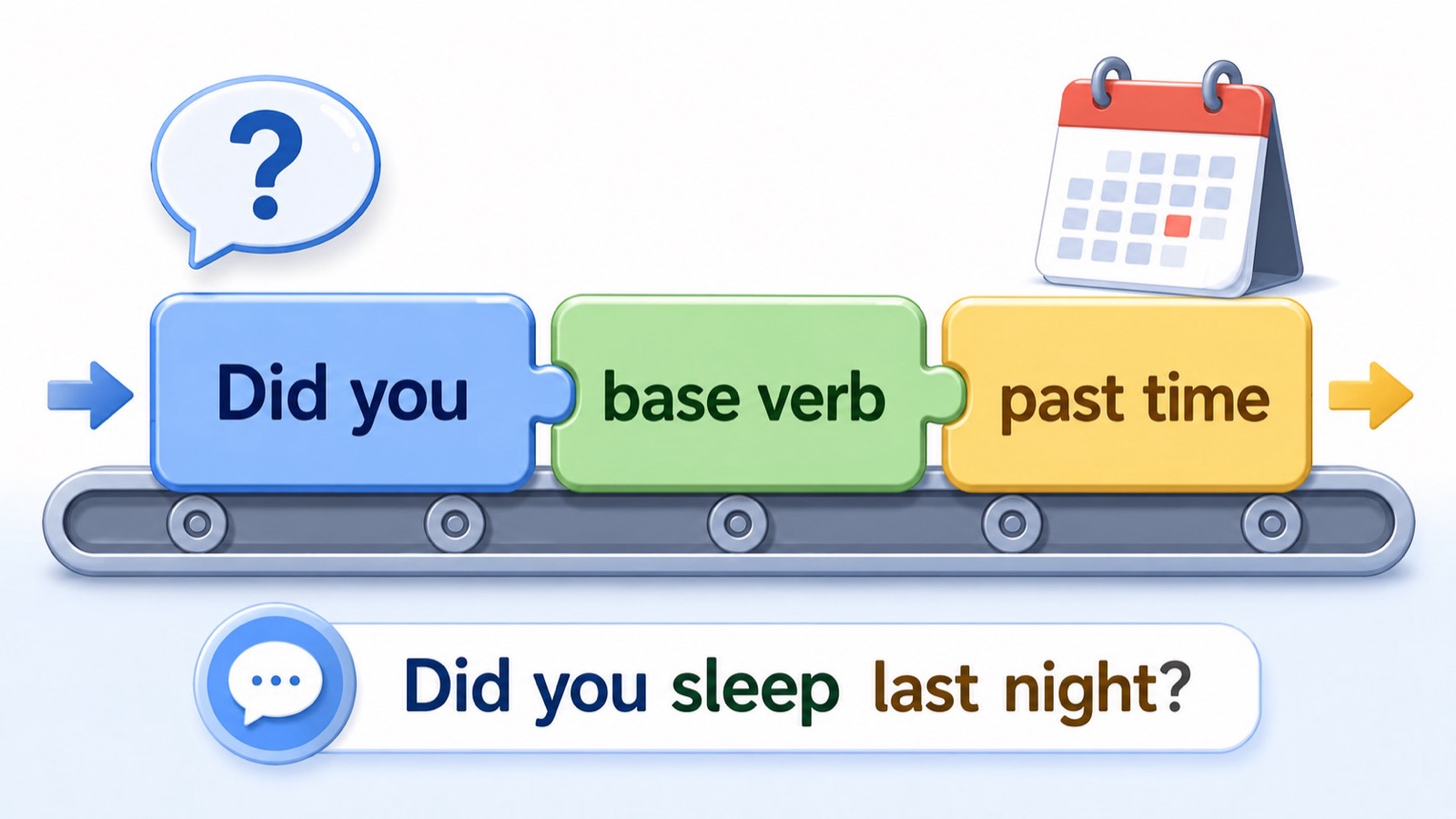
Did you… 最适合用来问“你过去有没有做某个动作”。先放 Did you,再接动词原形,最后加过去时间,例如 Did you sleep well last night?。不要写 Did you slept,因为 did 已经把句子带到过去,后面的主要动词要回到原形。
Did you 过去式问句到底问什么?
British Council 的 Past simple 语法页把一般过去时用于过去发生的一次动作、过去反复发生的动作,或过去持续一段时间的状态。它也说明,一般过去时问句可以用 did 构成。
所以 Did you...? 的核心不是“你现在有没有”,而是“在过去那个时间点,你有没有做过这个动作”。
Did you sleep well last night?
你昨晚睡得好吗?

Did you eat breakfast this morning?
你今天早上吃早饭了吗?

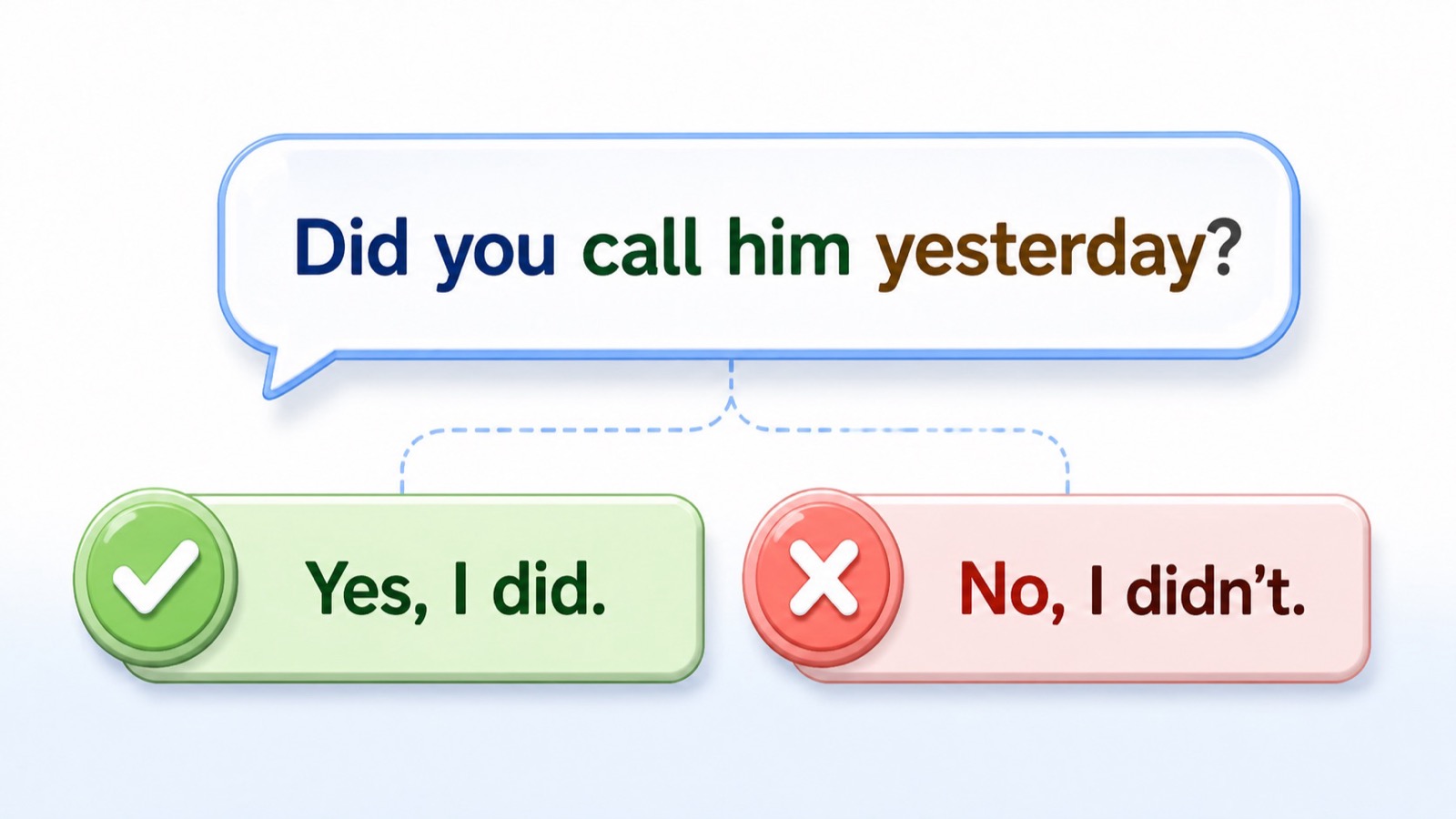
Did you call him yesterday?
你昨天给他打电话了吗?
这类句子有三个信息:谁、做什么、什么时候。中文里常把“昨晚、昨天、刚才”放在前面,英语里可以把过去时间放到句尾,让动作先清楚。
最稳的结构:Did + you + 动词原形 + 过去时间
把句子拆成四格会更好记:
Did + you + base verb + past time?
Did + you + sleep + last night?
Did + you + go + to work yesterday?
Did + you + watch + the video just now?
Cambridge Grammar Today 在 Past simple 的形式表里,把疑问句列成 Did + subject + work? 这类结构。这里的 work 是动词原形,不是 worked。
关键点是:did 已经是 do 的过去式,主要动词不要再变过去式。
| 中文想问 | 正确英语 | 常见错误 |
|---|---|---|
| 你昨天去上班了吗? | Did you go to work yesterday? | Did you went to work yesterday? |
| 你刚才看视频了吗? | Did you watch the video just now? | Did you watched the video just now? |
| 你昨晚睡得好吗? | Did you sleep well last night? | Did you slept well last night? |
| 你昨天吃晚饭了吗? | Did you have dinner yesterday? | Did you had dinner yesterday? |
如果你只记一句话,记这个:Did you 后面的主要动词先还原。
过去时间词怎么放?
初学者可以先把过去时间放在句尾。这样不会打断 Did you + 动词原形 这个核心框架。
Did you sleep well last night?
Did you go to the office yesterday?
Did you finish the report this morning?
Did you understand the sentence just now?
常见过去时间词有:
| 时间词 | 适合表达 |
|---|---|
| last night | 昨晚 |
| yesterday | 昨天 |
| this morning | 今天早上,前提是说话时早上已经过去 |
| just now | 刚才 |
| two days ago | 两天前 |
| when you were in school | 你上学时 |
如果没有明确过去时间,但双方都知道你在问哪件过去的事,也可以省略时间。例如朋友刚刚说自己看了一部电影,你问:
Did you like it?
你喜欢吗?
这里的过去时间藏在对话上下文里。
怎么回答 Did you 问句?
最短回答是:
Yes, I did.
No, I didn't.
如果要补充细节,可以先短答,再加一句完整过去时。
Did you call him yesterday?
Yes, I did. I called him after work.

Did you watch the video just now?
No, I didn't. I only read the subtitles.

Did you sleep well last night?
Not really. I woke up twice.
不要为了回答而重复完整问题。口语里 Yes, I did 已经足够自然;需要解释时,再补充发生了什么。
5 个场景替换练习
睡觉
Did you sleep well last night?
Did you wake up early this morning?
Did you dream last night?
吃饭
Did you have breakfast this morning?
Did you eat out yesterday?
Did you order coffee just now?
上班和上学
Did you go to work yesterday?
Did you take the subway this morning?
Did you finish your homework last night?
打电话和发消息
Did you call him yesterday?
Did you text her last night?
Did you reply to the message just now?
看视频和听英语
Did you watch the video just now?
Did you understand the speaker?
Did you repeat the sentence after listening?
这些句子适合放进 Video Language Learn 里做单句循环。先盲听一句,再打开字幕确认 Did you、动词原形和时间词,最后跟读到你能自己替换场景。
常见错误 1:Did you 后面又用了过去式
错误的根源通常是中文里有“昨天”,所以脑子里自动找过去式。
Wrong: Did you went to work yesterday?
Right: Did you go to work yesterday?

Wrong: Did you watched my video just now?
Right: Did you watch my video just now?
判断方法很简单:只要前面已经有 Did,后面的主要动词先用原形。
常见错误 2:把 be 动词也写成 Did you be
Did you 主要配普通动作动词,比如 go、eat、watch、call、finish。遇到 be 动词的过去问句,要用 was 或 were。
Wrong: Did you be tired last night?
Right: Were you tired last night?

Wrong: Did he be at home yesterday?
Right: Was he at home yesterday?
British Council 的 questions and negatives 语法页把 be 的过去问句列为 Was I?、Was he?、Were you? 这类形式。也就是说,问过去状态时不要硬套 Did you。
常见错误 3:把 Did you 和 Have you 混成一类
Did you 常问一个已经落在过去时间里的动作。
Did you watch that movie yesterday?
你昨天看那部电影了吗?
Have you 常问到现在为止的经历、结果或是否做过某事,重点不一定是某个明确过去时间。
Have you watched that movie?
你看过那部电影吗?
这不是说两者永远不能表达相近意思,而是初学者要先分清重心:如果你已经说了 yesterday、last night、just now,优先考虑 Did you;如果你问“到现在为止有没有过这个经历”,再考虑 Have you。
一个例外:Who 作主语时常不用 did
British Council 也提醒,who 问句有一类常不使用 did。关键看 who 是不是动作的发出者。
Who called you yesterday?
昨天谁给你打电话了?

Who wrote this sentence?
谁写了这个句子?
这里的 who 本身就是主语,所以不是 Who did call you yesterday?。
但如果 who 不是主语,而是宾语,就可以用 did。
Who did you call yesterday?
你昨天给谁打电话了?

Who did you meet last night?
你昨晚见了谁?
判断方法是:如果你问“谁做了这个动作”,多半不用 did;如果你问“你对谁做了这个动作”,就用 Who did you...。
用 Video Language Learn 练到能开口
不要只背规则。你可以用一个真实视频片段做五步练习:
- 先盲听一句,听到
Did you就暂停。 - 单句循环,听出后面的动词是不是原形。
- 打开字幕,标出
Did you / base verb / past time。 - 跟读三遍,重点读清
Did you的连贯节奏。 - 换一个动词和时间词,自己造一句新问题。
例如从 Did you watch the video just now? 换成:
Did you read the sentence just now?
Did you repeat the sentence just now?
Did you understand the sentence just now?
这样练的重点不是记住某一个例句,而是把问句结构变成可以迁移的口语块。
小结
Did you 过去式问句的核心结构是:
Did + you + 动词原形 + 过去时间?问过去动作,用 Did you go、Did you watch、Did you call。不要把主要动词再变过去式,也不要把 be 动词硬塞进 Did you be。先把睡觉、吃饭、上班、打电话、看视频这几类高频场景练熟,再去扩展更复杂的过去时问句。
FAQ
Did you 后面用原形还是过去式?
用动词原形。did 已经承担一般过去时,所以说 Did you go,不说 Did you went;说 Did you watch,不说 Did you watched。
Did you 可以问所有过去的事情吗?
不能。Did you 主要问过去发生的普通动作。如果谓语是 be,要用 Were you 或 Was he;如果强调到现在为止的经历,常要考虑 Have you。
Did you 的回答一定要重复动词吗?
不一定。短回答用 Yes, I did 或 No, I didn't。需要补充细节时再说完整句,例如 Yes, I did. I watched it last night.
参考资料
- British Council LearnEnglish: Past simple
- British Council LearnEnglish: Questions and negatives
- Cambridge Dictionary, English Grammar Today: Past simple (I worked)
- Cambridge Dictionary, English Grammar Today: Do
Practice Next
把这套方法放进一个真实视频里练
学习指南的价值不在收藏,而在马上完成一次训练。选一集真实英文视频,从盲听、逐句精听、跟读或听写开始。