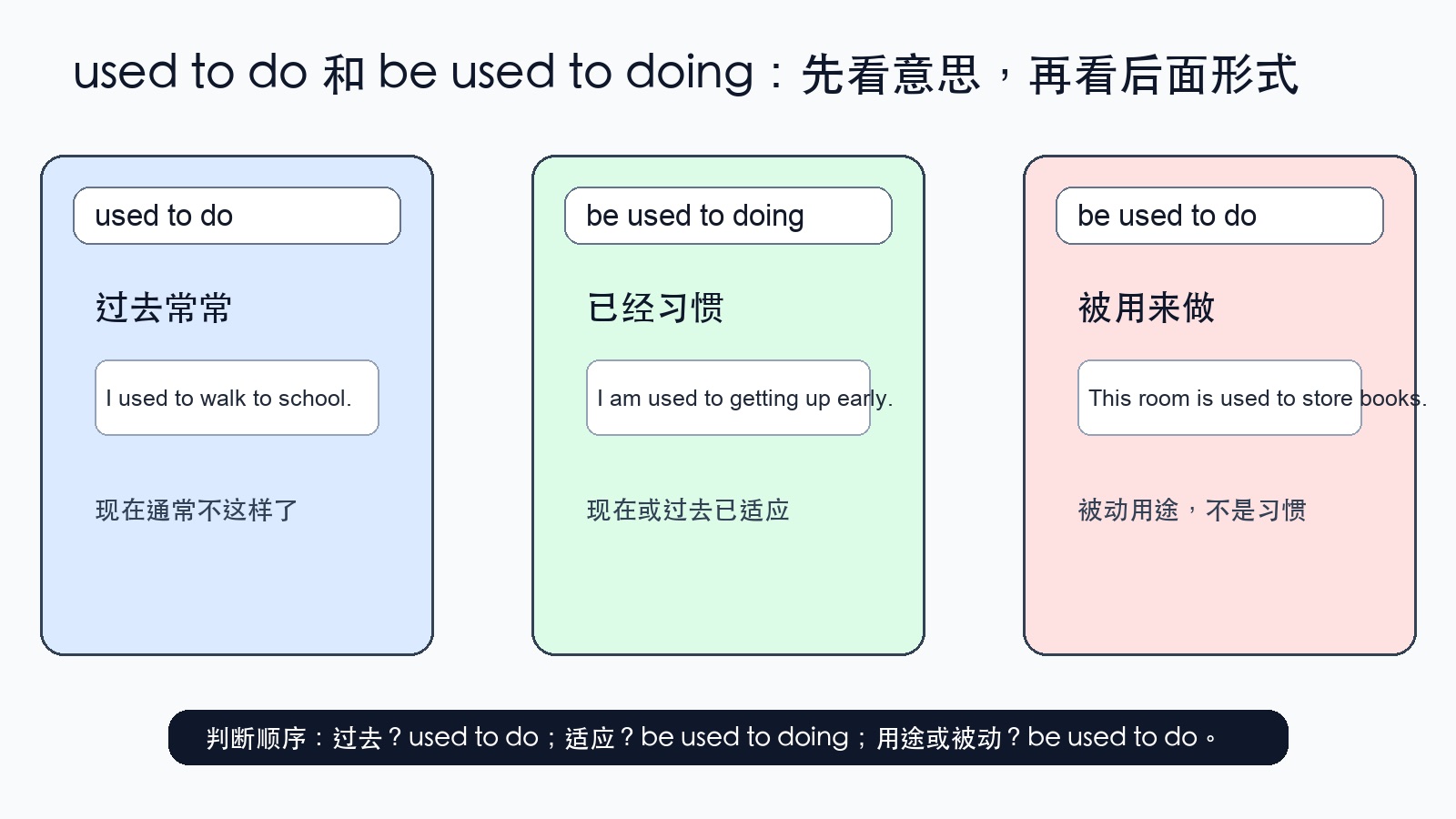
used to do和be used to doing的区别,先别从中文“习惯”下手,要看它是在说过去,还是在说适应。used to do 说过去常常或过去曾经如此,后面接动词原形;be used to doing 说已经习惯某事,后面接名词或 doing;be used to do 还可能是“被用来做”的被动用途。
先用一句话分清三个长得很像的结构
| 结构 | 核心意思 | 后面接什么 | 例句 |
|---|---|---|---|
used to do | 过去常常,过去是这样,现在通常不同 | 动词原形 | I used to walk to school. |
be used to doing | 已经习惯,不觉得陌生或不适 | 名词、代词、doing | I am used to getting up early. |
be used to do | 某物被用来做某事 | 动词原形 | This room is used to store books. |
最容易错的是把第二个写成第一个的形式:
I am used to get up early. 不自然。
I am used to getting up early. 更准确。
因为 be used to doing 里的 to 是介词,后面要接名词或 -ing。Oxford 对 be used to 的解释是“因为经常做或经历而熟悉”,并给出 used to doing something 这类结构;Cambridge 的语法说明也强调 be used to 后面接名词或 -ing 形式。12
第一步:如果说“过去常常,现在通常不同”,用 used to do
used to do 只用来讲过去的习惯、过去的状态,常常带有“现在不这样了”的意思。British Council 的 used to 说明里也把它限定为过去曾经真实或发生、现在不再如此的状态或动作。3
比如:
I used to walk to school.
我以前常常走路上学。现在可能不走路上学了。
She used to have long hair.
她以前是长头发。现在可能不是了。
There used to be a small shop here.
这里以前有一家小店。现在可能没有了。
注意,used to do 后面不是 doing:
I used to swimming every weekend. 不对。
I used to swim every weekend. 对。
这里的 to 是 used to 这个结构的一部分,后面接动词原形。不要因为中文里有“习惯”两个字,就自动写成 doing。
第二步:如果说“已经习惯了”,用 be used to doing
be used to doing 的重点不是过去,而是“已经适应”。它可以说现在、过去或将来某个时间点的适应状态。
I am used to getting up early.
我已经习惯早起。
She was used to working under pressure.
她当时已经习惯在压力下工作。
You will soon be used to the new schedule.
你很快会习惯新的安排。
这个结构里的 be 会跟着时态和主语变化:
| 时间或主语 | 正确句子 | 判断 |
|---|---|---|
| 现在 | I am used to the noise. | 我现在已经习惯这种噪音。 |
| 过去 | He was used to living alone. | 他那时已经习惯独居。 |
| 将来 | They will be used to the routine soon. | 他们很快会适应这个流程。 |
所以,be used to doing 不是“现在习惯”的唯一表达,而是“某个时间点已经适应”的表达。真正决定后面用 doing 的,不是“现在”,而是 to 在这里是介词。
第三步:如果是“被用来做”,那是 be used to do
还有一个特别容易混进去的结构:be used to do。
它不是“习惯于做”,而是普通动词 use 的被动形式,意思是“被用来做某事”。Oxford 对 use 的用途义说明里有 be used to make... 这类例子,表示某物被拿来完成一个目的。4
对比一下就很清楚:
| 句子 | 意思 | 结构 |
|---|---|---|
I am used to working at night. | 我习惯晚上工作。 | be used to doing |
This lamp is used to light the stage. | 这盏灯被用来照亮舞台。 | be used to do |
This app is used to practise dictation. | 这个应用被用来练听写。 | be used to do |
判断方法很简单:看主语是不是“人适应某事”,还是“东西被拿来做某事”。
如果主语是人,并且意思是适应,多半是:
I am used to + doing / noun
如果主语是工具、房间、材料、方法,并且意思是用途,多半是:
It is used to + do
否定和疑问:did 后面写 use to,不写 used to
肯定句写:
I used to live near the river.
但否定句和疑问句里,过去时已经交给 did 了,后面的 use 通常写原形。Oxford 的语法点明确列出 didn't use to 和 Did she use to...,并提醒疑问句里拼作 use to。5
| 中文意思 | 推荐写法 |
|---|---|
| 我以前不喜欢咖啡。 | I didn't use to like coffee. |
| 你以前住在这里吗? | Did you use to live here? |
| 她以前经常坐公交吗? | Did she use to take the bus? |
不要写:
I didn't used to like coffee.
Did you used to live here?
口语里有时听不清 use to 和 used to,因为连读后声音很接近。写作和学习时,先按 did + 动词原形 这条规则处理,会更稳。
get used to doing:不是“已经习惯”,而是“逐渐适应”
get used to doing 和 be used to doing 也常被混在一起。
be used to doing:已经习惯。
get used to doing:变得习惯,逐渐适应。
对比:
I am used to driving on the left.
我已经习惯靠左开车。
I am getting used to driving on the left.
我正在慢慢习惯靠左开车。
It took me two weeks to get used to the new job.
我花了两周才适应新工作。
记住这个差别很有用:be 更像结果状态,get 更像变化过程。
常见错误:看到 to 先别急着接原形
中文母语学习者常把 to 一律当成 “to do” 的 to,于是会写出这几类错句。
| 错句 | 问题 | 改法 |
|---|---|---|
I am used to wake up early. | be used to 后面不能直接接原形表示习惯。 | I am used to waking up early. |
I used to waking up early. | used to do 后面要接动词原形。 | I used to wake up early. |
Did you used to play basketball? | did 后面用原形 use。 | Did you use to play basketball? |
This room is used to storing books. | 如果说“被用来存书”,要用被动用途结构。 | This room is used to store books. |
最实用的判断顺序是:
- 是不是过去常常,现在通常不同?用
used to do。 - 是不是已经习惯某事?用
be used to doing / noun。 - 是不是某物被用来完成一个目的?用
be used to do。
练习:先判断意思,再选形式
把括号里的中文改成英文。
-
I ________ coffee, but now I drink it every day.
我以前不喜欢咖啡。 -
She is ________ in front of a camera.
她已经习惯在镜头前说话。 -
This small room is ________ extra chairs.
这个小房间被用来存放备用椅子。 -
Did you ________ near this school?
你以前住在这所学校附近吗?
答案:
didn't use to likeused to speakingused to storeuse to live
做这类题时不要只看中文“习惯”。先问它是过去习惯、已经适应,还是用途被动。把这个问题问清楚,do、doing 和 to do 的选择就不会乱。
放进听写和跟读里怎么练
如果你只看表格,容易当场懂、下次又混。更稳的练法是把三类句子放进同一个小训练里:
- 先听一句
used to do,判断它是不是过去不再如此。 - 再听一句
be used to doing,抓be和doing。 - 最后听一句
be used to do,判断主语是不是“被用来做某事”。
在 Video Language Learn 里,可以用 单句循环 反复听包含 used to 的句子,再用 听写训练 检查自己有没有漏掉 be、did 或 -ing。这类小词如果只靠看,容易觉得简单;真正听写一次,才知道自己是否能在真实句子里抓住结构。
参考资料
- Oxford Learner’s Dictionaries:used to modal verb
- Oxford Learner’s Dictionaries:used to adjective
- Oxford Learner’s Dictionaries:use verb
- British Council LearnEnglish Teens:Used to
- Cambridge Dictionary Blog:I used to work hard / I’m used to working hard
Footnotes
-
Oxford Learner’s Dictionaries, “used to adjective”, accessed 2026-10-09. ↩
-
Cambridge Dictionary Blog, “I used to work hard/I’m used to working hard”, accessed 2026-10-09. ↩
-
British Council LearnEnglish Teens, “Used to”, accessed 2026-10-09. ↩
-
Oxford Learner’s Dictionaries, “use verb”, accessed 2026-10-09. ↩
-
Oxford Learner’s Dictionaries, “used to modal verb”, accessed 2026-10-09. ↩
Practice Next
用真实视频练一次这个知识点
读懂规则后,选一段真实英文视频,把这个表达放回声音、字幕、跟读和听写里,才更容易变成主动表达。