spend、cost、pay、take 都可能被译成“花”,但不能互换。最稳的判断不是背口诀,而是先问:谁是主语,句子要说的是用钱、价格、付款动作,还是完成一件事所需的时间? 人把钱或时间用在某事上,常用 spend;东西或服务需要多少钱,常用 cost;把钱交出去或结清某项费用,常用 pay;事情要多久,常用 take。
先用一张表选词
| 你真正想说什么 | 先看谁是主语 | 常用动词 | 最稳结构 | 例句 |
|---|---|---|---|---|
| 某人把钱用在什么上 | 人 | spend | spend + 钱 + on + 事物 | I spent $10 on lunch. |
| 某物或服务要多少钱 | 物、服务、事情 | cost | something costs (someone) + 钱 | Lunch cost me $10. |
| 某人把钱付给谁或为了什么 | 人 | pay | pay + 钱 / pay + 账单 / pay for + 事物 | I paid $10 for lunch. |
| 完成某事需要多久 | 事情、行程、任务 | take | It takes + 人 + 时间 + to do | It took me an hour to finish. |
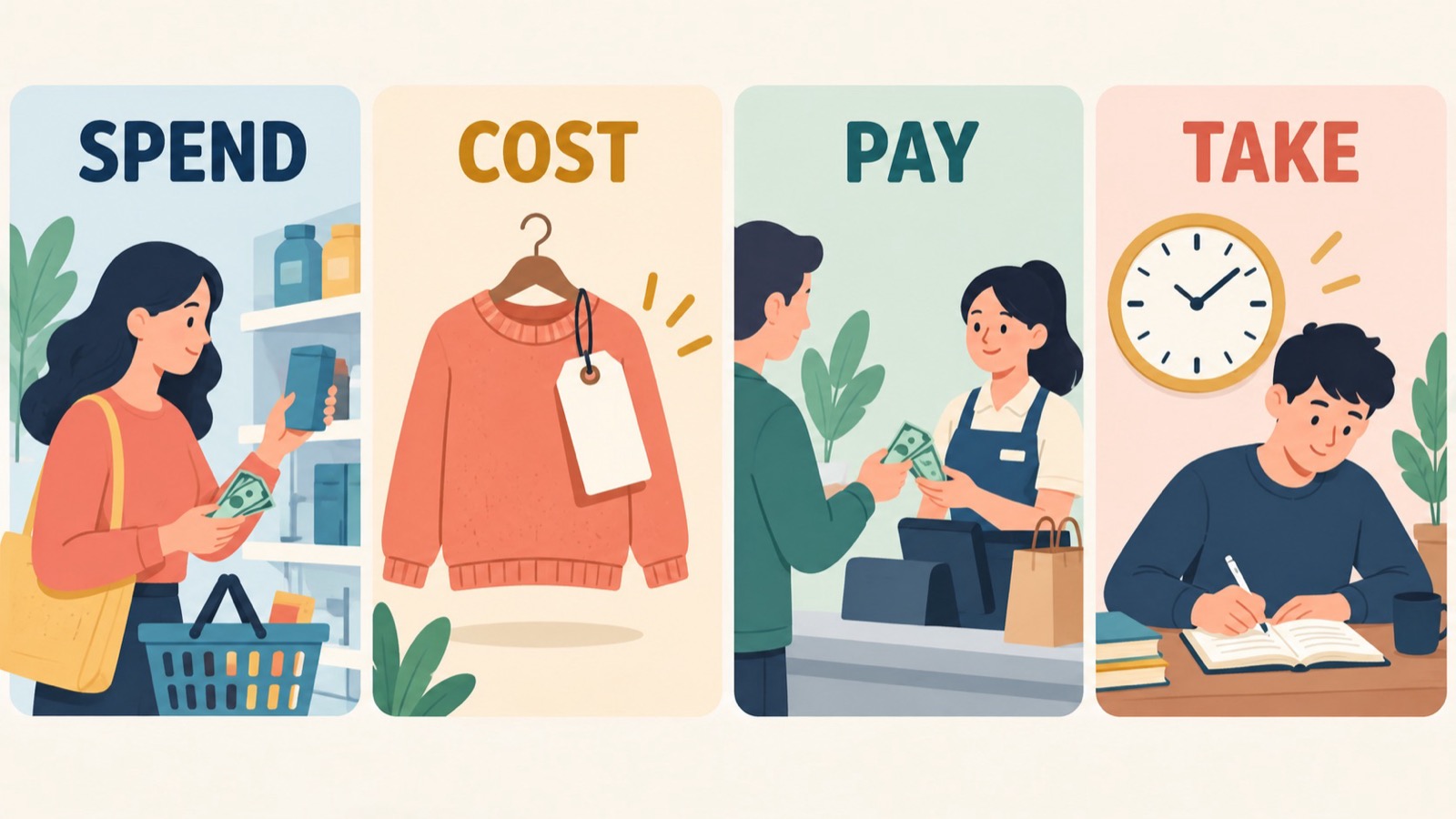
这个表里最容易被忽略的一点是:take 强调完成某事所需的时间,也可以以人为主语;而 spend 也能说时间,但它强调某个人把时间用在什么活动上。下面把四种视角拆开。
1. 人把钱用在某处,用 spend
spend 的主语通常是人、机构等“使用钱的人”。你想表达的是:这个人把多少资金用在什么地方。
I spent $10 on lunch.
我午饭花了 10 美元。

She spends too much money on clothes.
她在衣服上花的钱太多。
钱花在某物上时,常见结构是:
spend + 金额 + on + 名词
spend + 金额 + on + doing
所以不要把中文“为午饭花钱”逐字搬成 spend money for lunch。Cambridge Grammar 对这个搭配的提示是:表示钱用于某物时,使用 spend money on something。如果你还想表达花的是时间,也可以说:
I spent an hour reading the article.
我花了一小时读这篇文章。
这里的重点是“我把一小时用于阅读”。后面接 doing,不是 to read。
2. 东西或服务要多少钱,用 cost
cost 的视角反过来:把商品、服务或事情放在主语位置,说它需要你付出多少钱。
Lunch cost me $10.
这顿午饭花了我 10 美元。

The ticket costs $25.
这张票要 25 美元。
最常用的骨架是:
something costs (someone) + 金额所以不是 I cost $10 for lunch。你是付款的人,不是“价格的来源”;把午饭放回主语,就能说对:Lunch cost me $10. Cambridge Dictionary 把 cost 作动词解释为某物或某事使人必须支付一个金额,这正是这里的主语视角。
如果你的真正问题是“做某事要多少钱”,可以继续看How much does it cost to 怎么用:那一页专门练问句结构和 does it cost 不加 s 的原因。
3. 强调把钱交出去、结账或付款对象,用 pay
pay 关注付款这个动作,尤其适合说你结清账单、把钱交给某人,或为某项东西付款。
I paid $10 for lunch.
我为午饭付了 10 美元。

We paid the bill.
我们付了账单。

She paid the driver in cash.
她用现金付给了司机。
先分清两种常见结构:
pay + 金额 / bill / rent / tax
pay for + 买到的事物或服务
例如 pay the bill 不需要 for,因为 bill 就是直接宾语;但如果直接宾语是你买的东西,通常用 pay for,如 pay for the tickets。Cambridge Grammar 也把这个边界说得很清楚:买到的东西作宾语时,pay 后要接 for。
spend 和 pay 可以谈同一笔钱,但镜头不同:
I spent $10 on lunch.
我把 10 美元花在午饭上。

I paid $10 for lunch.
我为午饭付了 10 美元。
第一句重点是资金用途,第二句重点是付款。日常点餐、买票、交房租,若你要说“付了没有、付给谁、怎么付”,优先想到 pay。
4. 事情需要多久,用 take
说完成一项任务、走一段路或处理一件事需要多久时,常用 take。常见主语是“事情”或形式主语 it,也可以是人,例如 I took an hour to finish the report.,不能只凭人作主语就判错。
It takes me an hour to finish the report.
我完成这份报告要一小时。

The trip took us two hours.
这段行程花了我们两小时。
要表达“我主动把一小时用于读书”,说 I spent an hour reading;要表达“读完这篇文章这件事需要一小时”,说 It took me an hour to read the article。两句都可能真实,但焦点不同。
Cambridge Grammar 把 take 的这一类明确归为时间与时长用法。想练 It takes、It took 和 How long does it take 的完整时态与问句,可以看It takes 句型怎么用。
一道题同时练四个词
假设你报了一门线上课,课程费用是 50 美元,完成第一课需要 30 分钟。把中文先拆成四个不同的问题:
我把 50 美元花在课程上。
I spent $50 on the course.

这门课程要 50 美元。
The course costs $50.

我为课程付了 50 美元。
I paid $50 for the course.

完成第一课要 30 分钟。
It takes 30 minutes to finish the first lesson.
别先问“中文的花怎么翻”。先圈出句子主语,再判断你是在说钱的用途、物的价格、付款动作还是任务时长。这样换成购物、交通、学习、旅行场景,框架仍然能用。
常见错误,为什么错
错误 1:I spend $10 for lunch.
更自然:I spent $10 on lunch.
说钱用在什么上,spend 常跟 on。如果你要强调付款,改成 I paid $10 for lunch.
错误 2:I cost $10 for lunch.
更自然:Lunch cost me $10.
cost 的主语是午饭、票、服务或项目,不是付钱的人。
错误 3:I paid the lunch.
更自然:I paid for lunch. 或 I paid the bill.
你直接结清的是 bill,但“午饭”是你获得的事物时,常用 pay for lunch。
错误 4:It took me one hour reading the article.
正确:It took me one hour to read the article. 或 I spent one hour reading the article.
第一个句型把“阅读这件事需要多久”说清楚;第二个句型强调你把时间投入阅读。不要把 take 和 spend 后面的结构直接替换。I took one hour to read the article. 也成立,不能把“人作主语”本身判成错误。
30 秒自测
选词并补全:
- This book ___ me $15.
- I ___ $15 on this book.
- I ___ $15 for this book.
- It ___ me two days to finish the book.
答案:cost、spent、paid、took。
如果第 1、2、3 题总混在一起,先不要继续背更多例句。把每句话的主语写在前面:book、I、I,答案会更清楚。之后可以把四句放进一段英语素材,先逐句听清主语和动词,再跟读并替换成你自己的购物或学习场景。
FAQ
spend、cost、pay、take 的核心区别是什么?
人把钱用在某物上常用 spend,物或服务需要多少钱常用 cost,把钱交出去或结清费用常用 pay,事情需要多久常用 take。spend 也可以表示把时间用于某项活动。
可以说 I spend ten dollars for lunch 吗?
不建议。说钱花在某物上时,更自然的是 I spent ten dollars on lunch.。如果强调付款,可以说 I paid ten dollars for lunch.。
花时间用 spend 还是 take?
两者都可能正确。I spent an hour reading 强调你把一小时用于阅读;It took me an hour to read the article 强调读完文章这件事需要一小时。
cost 的过去式是 costed 吗?
表示“需要多少钱”的 cost,过去式通常仍是 cost,例如 The trip cost us $200.。不要写成 costed。
参考资料
- Cambridge Grammar: Word patterns: spend
- Cambridge Dictionary: cost
- Cambridge Grammar: Word patterns: pay
- Cambridge Grammar: take
补充用法来源:Oxford Learner’s Dictionaries: take(time)。
Practice Next
用真实视频练一次这个知识点
读懂规则后,选一段真实英文视频,把这个表达放回声音、字幕、跟读和听写里,才更容易变成主动表达。