there be 句型的核心不是把中文“有”翻成一个固定单词,而是表达“某处存在某人或某物”。先问自己一句:这个“有”是不是在说位置里出现了东西?如果是,就用 there is / there are + 名词 + 地点。例如“墙上有一幅画”不是先找“墙”当主语,而是说 There is a picture on the wall.
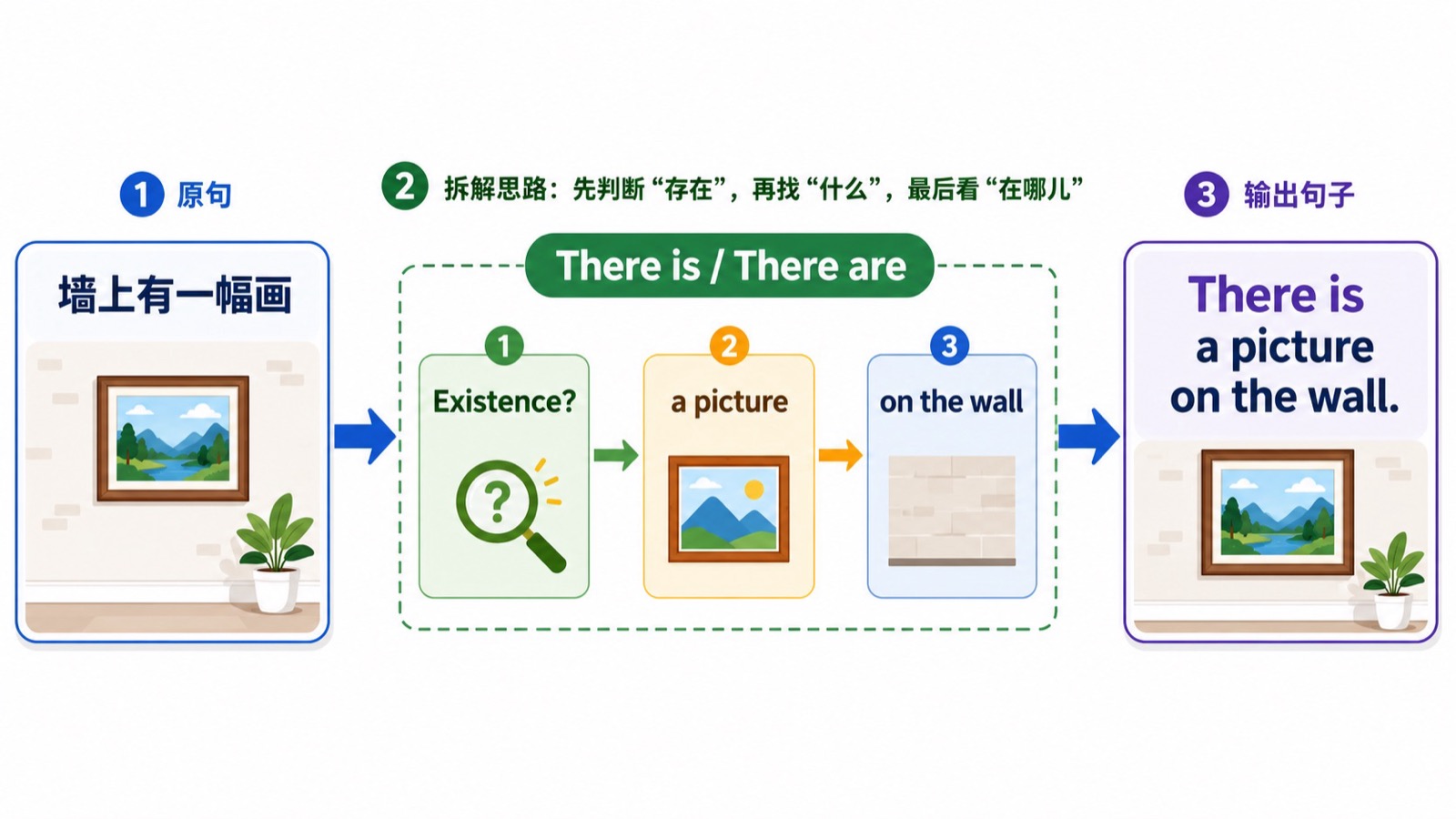
先判断中文“有”是哪一种
中文里的“有”至少有两种常见意思。
第一种是“存在”。你是在说某个地方出现了某个东西:
墙上有一幅画。
There is a picture on the wall.

山上有几只羊。
There are some sheep on the mountain.
这类句子的重点不是墙拥有画,也不是山拥有羊,而是“这个位置存在什么”。这就是 there be 最常见的用途。
第二种是“拥有、带有、具备”。你是在说某个人或东西本身拥有某物、特征或关系:
I have a book.
我有一本书。

She has two brothers.
她有两个兄弟。

The room has three windows.
这个房间有三扇窗。
所以,不要把中文所有“有”都机械改成 there be,也不要把所有“有”都机械改成 have。判断标准很简单:如果重点是“某处存在什么”,先考虑 there be;如果重点是“谁拥有、具备什么”,再考虑 have。
there is 和 there are 怎么选
there be 不是一个完整固定词,它会根据后面的名词变化:
| 后面的名词 | 用法 | 例句 |
|---|---|---|
| 单数可数名词 | there is | There is a picture on the wall. |
| 不可数名词 | there is | There is some water in the cup. |
| 复数名词 | there are | There are some sheep on the mountain. |
可以先用这个顺序拆句:
There is / are + 什么东西 + 在哪里比如“桌上有一本书”:
There is a book on the table.“教室里有很多学生”:
There are many students in the classroom.“杯子里有一些咖啡”:
There is some coffee in the cup.很多初学者会卡在地点词上,先想着 wall、mountain、table 怎么当主语。这个顺序会把你带回中文。英语更自然的路径是:先说“存在”,再说“存在什么”,最后补“在哪里”。
3 步把“某处有某物”说成英语
第 1 步,找地点
先找“在哪里”:
on the wall
on the mountain
on the table
in the cup
in the classroom
地点不要抢着当主语。它通常放在句子后面。
第 2 步,找真正存在的东西
再找“有什么”:
a picture
some sheep
two pears and one apple
some coffee
many students
这一步决定你用 there is 还是 there are。
第 3 步,按名词选 is 或 are
把结构拼起来:
There is a picture on the wall.
墙上有一幅画。

There are some sheep on the mountain.
山上有几只羊。

There is some coffee in the cup.
杯子里有一些咖啡。
如果你只记一句口诀,就记这个:
有东西在某处 = There is / are + 东西 + 地点there be 的就近原则怎么理解
当 there be 后面列出两个或多个名词时,英语里经常按 be 后面最近的名词来选 is 或 are。这个就是很多老师说的“就近原则”。
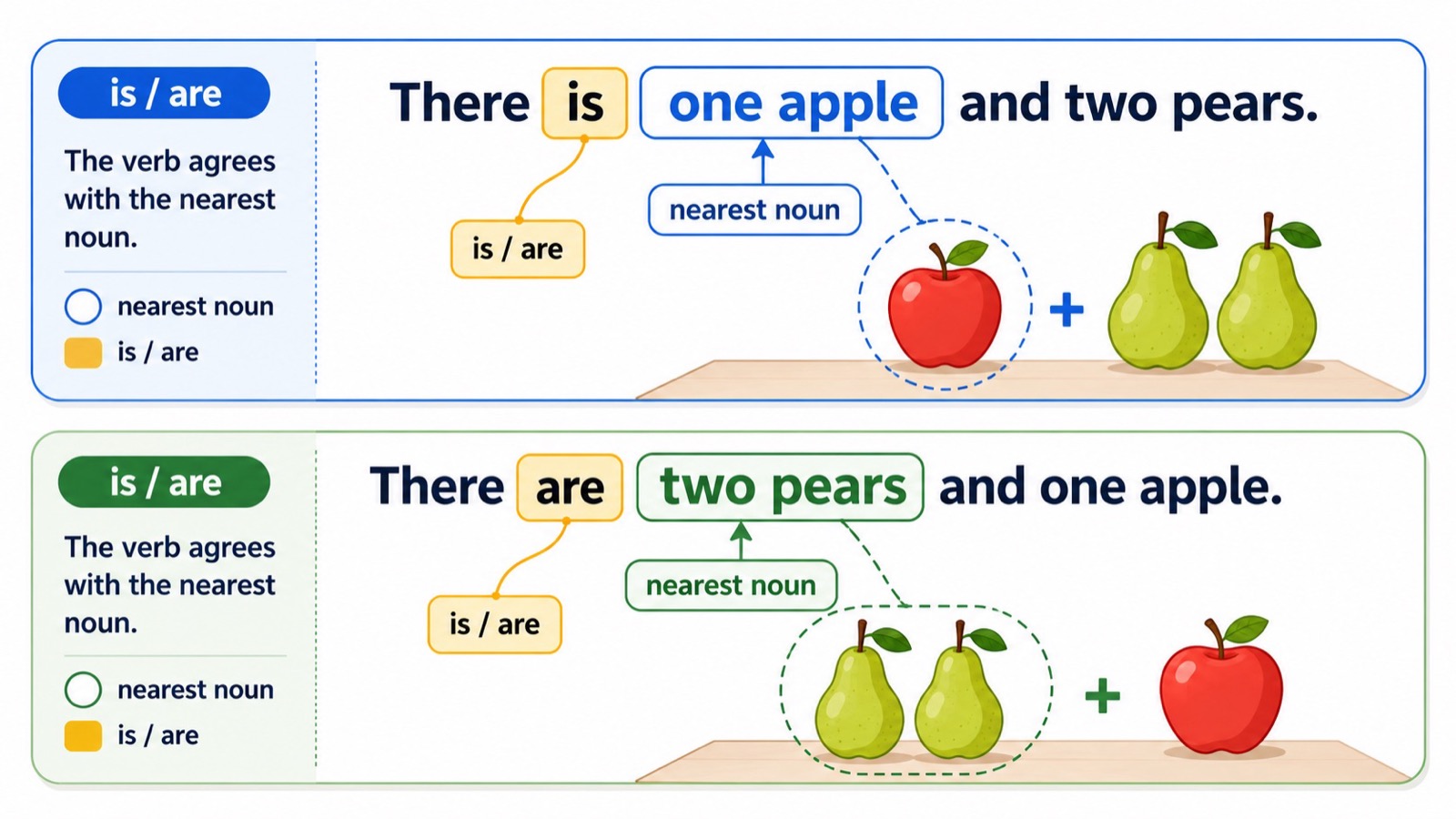
看这组:
There is one apple and two pears on the table.
桌上有一个苹果和两个梨。
is 后面最近的是 one apple,所以用 is。
换个顺序:
There are two pears and one apple on the table.
桌上有两个梨和一个苹果。
are 后面最近的是 two pears,所以用 are。
口语里你也会听到 There's two pears on the table 这类说法,但正式写作和考试练习里,不建议把它当标准答案。初学阶段先按最近的名词判断,句子会更稳。
如果你觉得“就近原则”容易乱,还有一个更稳的办法:把复数放前面。
There are two pears and one apple on the table.这样既自然,也不容易纠结。
there be 和 have 不要混用
中文说“墙上有一幅画”,很多人会直觉写成:
The wall has a picture.这句话不是完全不能理解,但它把重点放在 wall 身上,好像墙拥有一幅画。日常描述位置时,更自然的是:
There is a picture on the wall.再看几组:
| 中文 | 更自然的英文 | 为什么 |
|---|---|---|
| 桌上有两本书 | There are two books on the table. | 重点是桌上存在书 |
| 我有两本书 | I have two books. | 重点是我拥有书 |
| 杯子里有水 | There is water in the cup. | 重点是杯子里存在水 |
| 这个杯子有一个把手 | This cup has a handle. | 重点是杯子本身具备一个部件 |
| 房间里有三扇窗 | There are three windows in the room. | 重点是房间里存在窗 |
| 这个房间有三扇窗 | The room has three windows. | 也可说房间本身具备三扇窗 |
边界不是死的。The room has three windows 很自然,因为窗户是房间的组成部分。There are three windows in the room 也自然,因为你在描述房间里有什么。真正要避免的是把所有地点都写成拥有关系。
常见错误
错误 1,把地点当主语
Not natural: The wall has a picture.
Better: There is a picture on the wall.
如果你是在描述“墙上出现了什么”,用 there be。
错误 2,单复数不看名词
Wrong: There is many students in the classroom.
Right: There are many students in the classroom.
many students 是复数,所以用 are。
错误 3,不可数名词误用 are
Wrong: There are some water in the cup.
Right: There is some water in the cup.
water 是不可数名词,所以用 is。
错误 4,把 there be 和 have 写进同一句
Wrong: There has a picture on the wall.
Right: There is a picture on the wall.
there be 的 be 就是 is / are / was / were / will be 这些形式,不要再塞一个 has。
换成过去和将来怎么说
there be 不只用于现在。你可以换时态:
There was a picture on the wall.
以前墙上有一幅画。

There were many people in the park yesterday.
昨天公园里有很多人。

There will be a test tomorrow.
明天会有一次测试。
但初学阶段不要一上来背很多时态。先把现在时的 there is / there are 用稳,再扩展到 there was / there were / there will be。
用视频句子练 there be
学 there be 最容易犯的错,不是看不懂规则,而是听到中文“有”时手会自动写 have。你可以用 Video Language Learn 做三轮练习:
第一轮,单句循环。只听一句,判断它是在说“存在”还是“拥有”。
第二轮,全句听写。把 There is a picture on the wall 这种句子完整写出来,特别检查 is / are 和地点介词。
第三轮,影子跟读。把同一个结构换地点和名词:
There is a picture on the wall.
There is a map on the wall.
There are some books on the table.
There is some coffee in the cup.
练习目标不是背一句,而是形成一个反应:中文“某处有某物”,先想到 There is / are + 东西 + 地点。
小练习
把下面 6 句先判断“存在”还是“拥有”,再翻成英文。
| 中文 | 提示 |
|---|---|
| 墙上有一幅画。 | a picture / on the wall |
| 山上有几只羊。 | some sheep / on the mountain |
| 桌上有一个苹果和两个梨。 | one apple and two pears / on the table |
| 杯子里有一些咖啡。 | some coffee / in the cup |
| 我有一本英语书。 | I / have |
| 这个包有两个口袋。 | this bag / has |
参考答案:
There is a picture on the wall.
There are some sheep on the mountain.
There is one apple and two pears on the table.
There is some coffee in the cup.
I have an English book.
This bag has two pockets.
FAQ
there be 句型怎么用?
用 there is / there are + 名词 + 地点 表达某处存在某人或某物。单数和不可数名词用 there is,复数名词用 there are。例如 There is a picture on the wall 和 There are some sheep on the mountain。
there be 和 have 有什么区别?
there be 强调存在或位置,have 强调拥有、关系、特征或身体状态。There is a book on the table 是桌上有书;I have a book 是我有一本书。
there be 就近原则是什么意思?
当 there be 后面列出多个名词时,通常按 be 后面最近的名词选择 is 或 are。There is one apple and two pears on the table 看最近的 one apple,所以用 is;There are two pears and one apple on the table 看最近的 two pears,所以用 are。
there be 可以用过去式吗?
可以。现在时是 there is / there are,过去时是 there was / there were,将来可以说 there will be。例如 There were many people in the park yesterday。
最后记住一句
中文“有”不要急着找 have。先判断它是不是“某处存在某物”。如果是,就按这个顺序走:
There is / are + 存在的东西 + 地点把这一步练稳,再去处理问句、否定句和更复杂的时态,there be 就不会只是一个背过但不会用的语法名词。
Practice Next
把这套方法放进一个真实视频里练
学习指南的价值不在收藏,而在马上完成一次训练。选一集真实英文视频,从盲听、逐句精听、跟读或听写开始。