arrive、reach 和 get to 都可以翻成“到达”,但不能按中文的“到”机械套。最快判断法是:arrive 后面接地点时多用 at 或 in;reach 直接接地点,不加 to;get to 更像日常说“到那儿”。所以“到北京”可以说 arrive in Beijing、reach Beijing、get to Beijing,但不要写 arrive to Beijing。
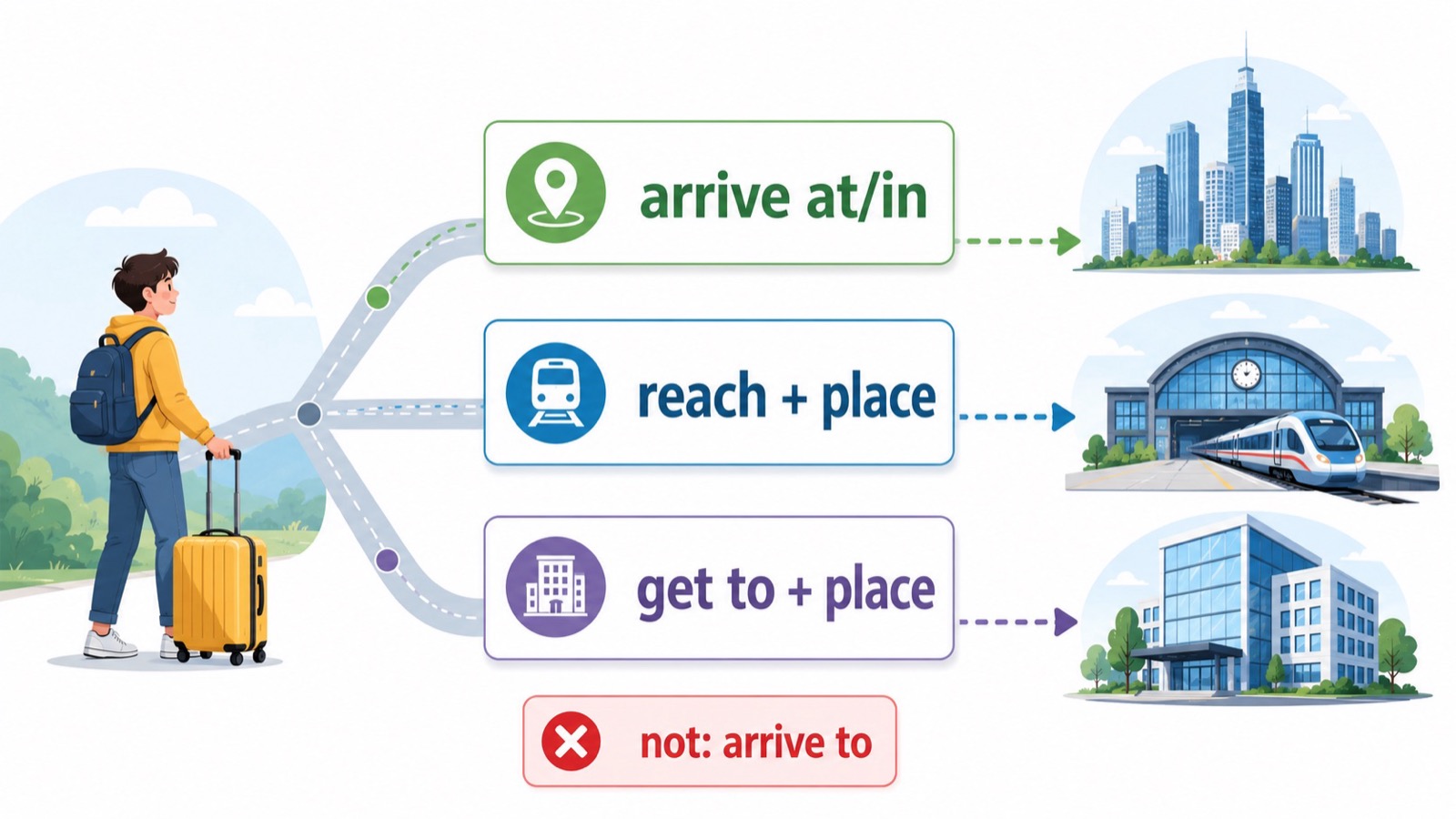
为什么中文学习者容易混
中文里一个“到”可以覆盖很多情况:
到北京
到机场
到家
到终点
但英语会把这件事拆成三个问题:
| 你要判断什么 | 对应选择 |
|---|---|
| 动词后面能不能直接接地点 | reach 可以直接接,arrive 通常不直接接普通地点 |
| 地点是大范围还是具体点 | arrive in 大范围,arrive at 具体地点 |
| 语气是正式描述还是日常说法 | arrive/reach 更清楚,get to 更日常 |
短视频里常说“reach 直接上,arrive 带尾巴”,这个方向对初学者有帮助,但还不够。因为 arrive 也有 arrive home、arrive here、arrive there 这类不用 at/in 的情况;get to 也不是 arrive 的低级替代,而是日常表达里很常用的一种说法。
arrive 怎么用:先看 at 和 in
Oxford Learner’s Dictionaries 把 arrive 标为不及物动词,意思是到达某地,尤其是旅程终点。Cambridge Grammar 也提醒,表达到达地点时,arrive 不用 to。
最常见的规则是:
| 表达 | 适合地点 | 例句 |
|---|---|---|
| arrive at | 具体点位、建筑、站点、活动地点 | We arrived at the station at 8. |
| arrive in | 城市、国家、较大区域 | She arrived in London yesterday. |
| arrive home / here / there | home、here、there 这类副词 | I arrived home late. |
所以不要把中文“到”直接翻成 to:
Wrong: We arrived to Beijing.
Better: We arrived in Beijing.
Wrong: The train arrived to the station.
Better: The train arrived at the station.这里的重点不是背“大地方 in,小地方 at”这一句,而是先想:我是不是在说一个区域,还是一个点位?国家、城市通常看作区域,用 in;车站、机场、门口、会议现场通常看作点位,用 at。
reach 怎么用:直接接你到达的地方
reach 表示“到达某地”时是及物动词,后面直接接地点。Oxford 的 reach 词条把 reach something/somebody 解释为到达旅行目的地;Cambridge Grammar 也明确提醒,reach 表示 arrive somewhere 或达到某个层级时,通常不接介词。
你可以这样说:
We reached the hotel before midnight.
我们午夜前到了酒店。
The hikers reached the top of the mountain.
徒步者到达了山顶。I finally reached Beijing after a long trip.
长途旅行后,我终于到达北京。不要写:
Wrong: We reached to the hotel.
Better: We reached the hotel.
reach 还有“达到某个程度、阶段、目标”的意思,比如 reach a decision、reach the final、reach 30 degrees。本文只讲“到达地点”这个用法,但你看到 reach 后面直接接名词,不要立刻以为少了 to。
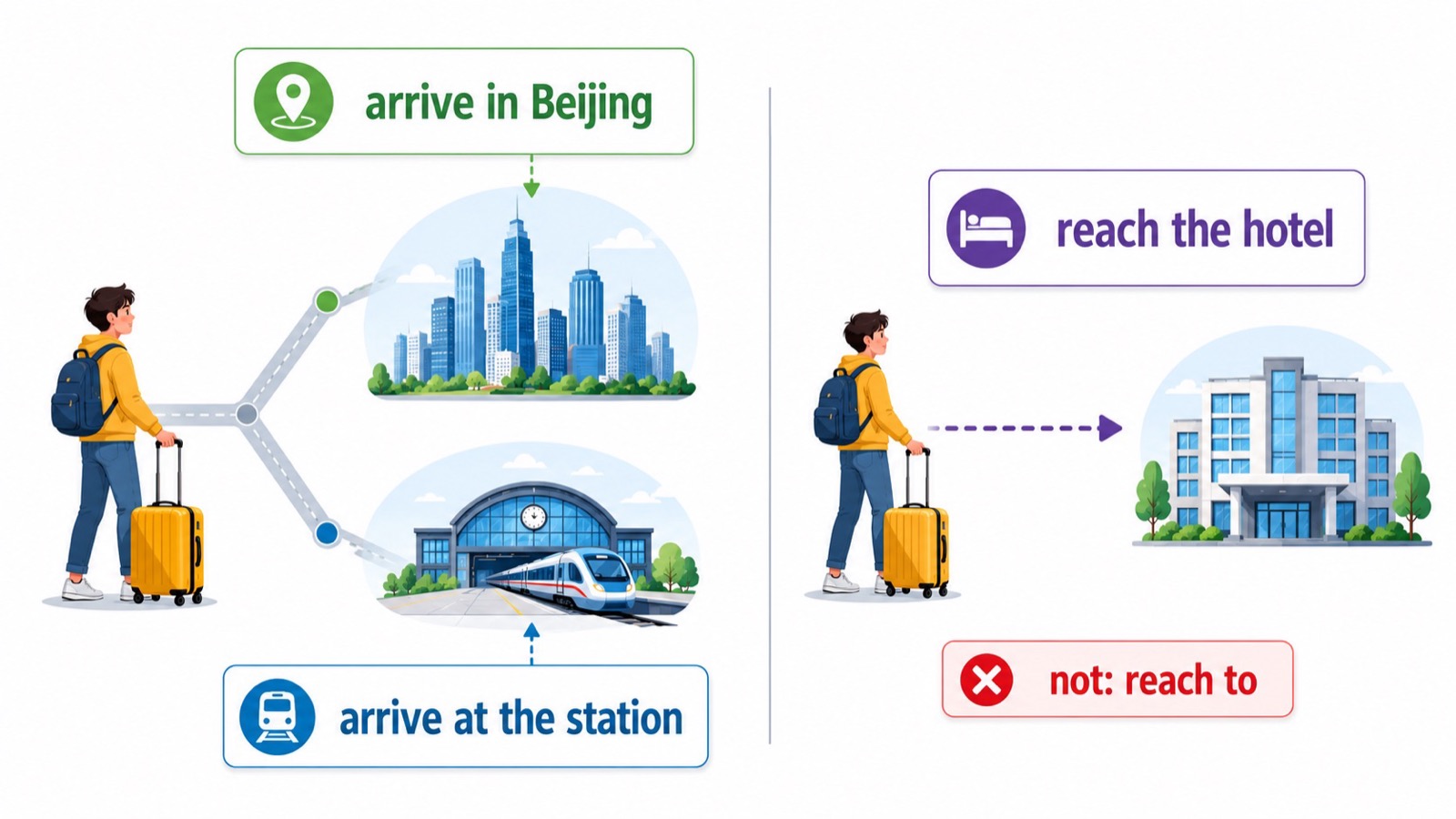
get to 怎么用:日常说“到某地”
get 本身可以表示到达或抵达某个地方,get to 后面接地点,在日常口语里很自然。
What time did you get to the office?
你几点到办公室?
We got to the airport just in time.
我们刚好及时赶到机场。How do I get to the train station?
我怎么到火车站?get to 的优势是生活化,尤其适合问路、上班、旅行、迟到、赶车这类场景。它不强调正式抵达,也不强调“终于达到目的地”的结果感,只是在说人到了某个地方。
如果你在写正式报告、新闻式叙述或需要精确表达时,arrive at/in 或 reach 往往更清楚。但在日常对话里,get to 非常常见。
3 秒判断:到底用哪一个
第 1 秒:后面是不是直接接地点
如果你想把地点直接放在动词后面,优先考虑 reach 或 get to。
reach the station
get to the station
arrive 后面要接普通地点时,先别急着加 to,通常要在 at/in 里选。
第 2 秒:地点是区域还是点位
用 arrive 时再判断地点类型:
arrive in Beijing
arrive in China
arrive at the airport
arrive at the hotel
有些地点可以按不同视角处理。比如 school 可以是一个具体地点,也可以是机构或活动场景。初学者先用最稳的判断:建筑、车站、机场、门口,用 at;城市、国家、地区,用 in。
第 3 秒:语气是日常还是更正式
日常问“你几点到”,get to 很自然:
What time did you get there?更正式或更清楚地说旅程终点,可以用 arrive:
The guests arrived at 7 p.m.强调终于到达某个目的地,或后面直接接目标地点,可以用 reach:
We reached the village before dark.旅行和上班场景例句
| 中文 | 自然英文 | 判断理由 |
|---|---|---|
| 我们昨晚到达伦敦 | We arrived in London last night. | London 是城市,用 arrive in |
| 火车准点到站 | The train arrived at the station on time. | station 是具体站点,用 arrive at |
| 我终于到了酒店 | I finally reached the hotel. | reach 直接接 hotel |
| 你几点到公司 | What time did you get to the office? | 日常问到达时间,用 get to |
| 她很晚才到家 | She arrived home very late. | home 作副词,不加 at/in |
| 我们天黑前到了村子 | We reached the village before dark. | 强调到达目的地,reach 直接接地点 |
不要把三者理解成完全一样的替换词。下面三句都可能翻成“我们到了机场”,但感觉不同:
We arrived at the airport.
我们到达了机场。
We reached the airport.
我们抵达了机场,强调目的地已经到。We got to the airport.
我们到了机场,日常说法。常见错误
错误 1:把 arrive 后面统一加 to
Wrong: I arrived to the office at nine.
Better: I arrived at the office at nine.
arrive 后面不是不能出现任何介词,而是不要用中文“到”的 to 去套普通地点。
错误 2:reach 后面多加 to
Wrong: We reached to the top.
Better: We reached the top.
reach 表示到达时已经带有“到达某处”的含义,后面直接接目的地。
错误 3:把 get to 当成不正式就不能用
get to 不低级,也不是错。它只是更日常。问路时说 How can I get to the museum? 很自然;写正式行程记录时,说 We arrived at the museum at 10 a.m. 会更清楚。
怎么放回真实句子里练
学这个区别,不要只背表格。更有效的方法是把它放回真实英文视频句子里,听到一个“到达”场景,就停下来判断三件事:
- 这个句子是在说旅程终点、目的地,还是日常到某处?
- 地点是城市国家,还是车站、机场、办公室这类具体点位?
- 动词后面有没有直接接地点?
在 Video Language Learn 里,你可以先用逐句精听听原句,再用单句循环反复听 arrive、reach 或 get to 前后的词;听写时把介词空出来,最后对照字幕检查自己写的是 at、in、to,还是没有介词。
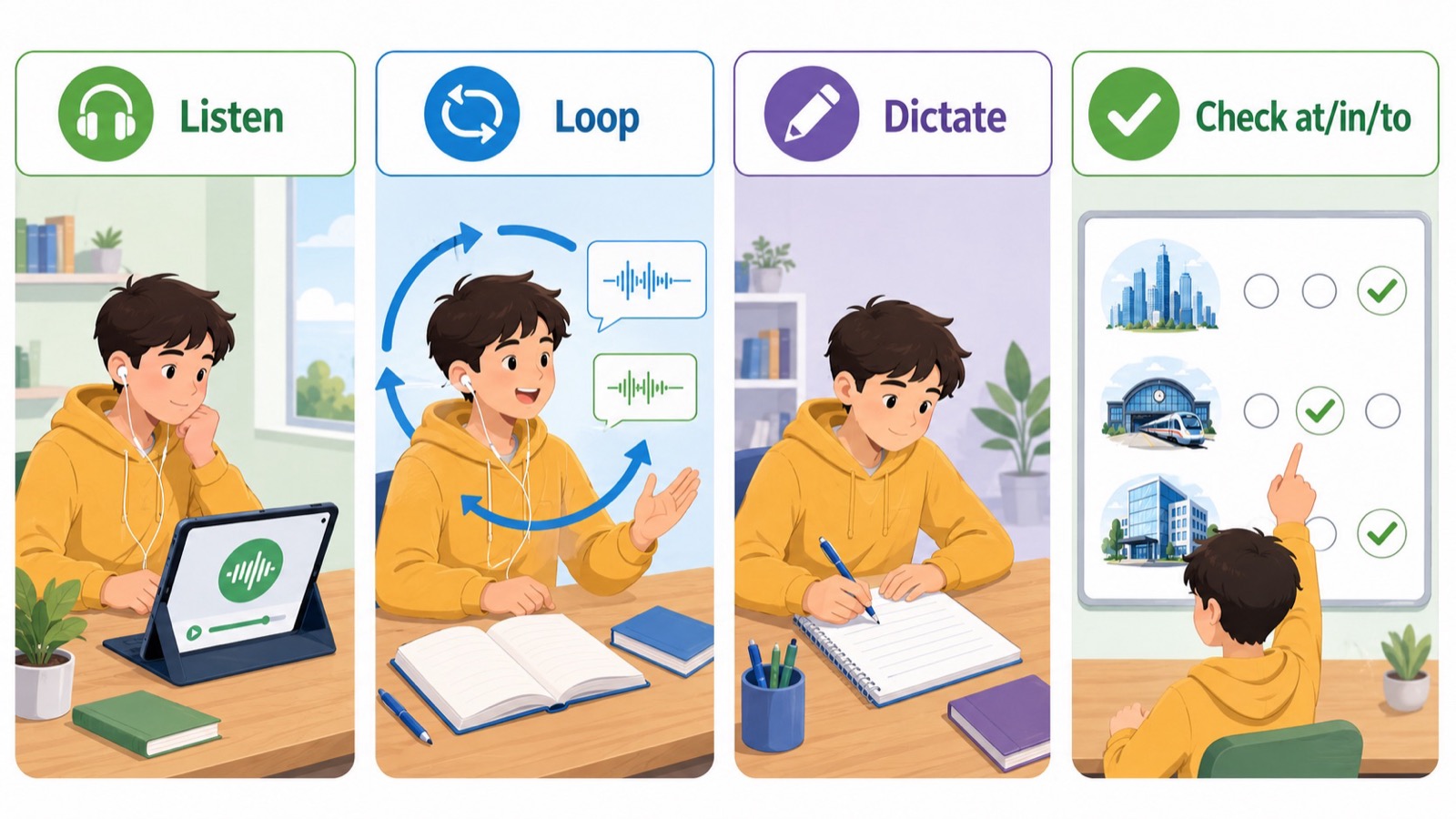
如果你总把 arrive to、reach to 写出来,可以专门收藏 5 个真实句子,按下面方式复盘:
arrive in + city/country
arrive at + station/airport/hotel
reach + place
get to + place
arrive home / here / there
先听清原句,再自己换地点造句。这样 arrive、reach 和 get to 就不再是三个中文都叫“到达”的词,而是三种不同的英文表达习惯。
FAQ
arrive at 和 arrive in 怎么区别
通常 arrive in 用在城市、国家、地区这类较大范围,arrive at 用在车站、机场、酒店、门口、会议地点等具体点位。初学者先按“区域用 in,点位用 at”判断,再结合具体语境微调。
reach 和 arrive 哪个更正式
两者都可以用于正式表达。差别主要不是正式程度,而是结构和语义重点:arrive 通常不及物,强调到达这个动作;reach 是及物动词,直接接目的地,也常带“终于到达目标”的结果感。
get to 后面一定要加地点吗
本文讲的是 get to a place 这个用法,后面通常接地点,比如 get to school、get to the airport。get to 还有影响某人、开始有机会做某事等其他用法,不要混在同一个规则里背。
arrive home 为什么不用 at
home 在 arrive home 里是副词,意思接近“到家”。here、there 也类似,所以可以说 arrive here、arrive there,不需要再加 at 或 in。
参考资料
- Oxford Learner’s Dictionaries: arrive, reach, get
- Cambridge Dictionary: arrive, get
- Cambridge Grammar: at, in and to for movement; word patterns with reach
Practice Next
把这套方法放进一个真实视频里练
学习指南的价值不在收藏,而在马上完成一次训练。选一集真实英文视频,从盲听、逐句精听、跟读或听写开始。