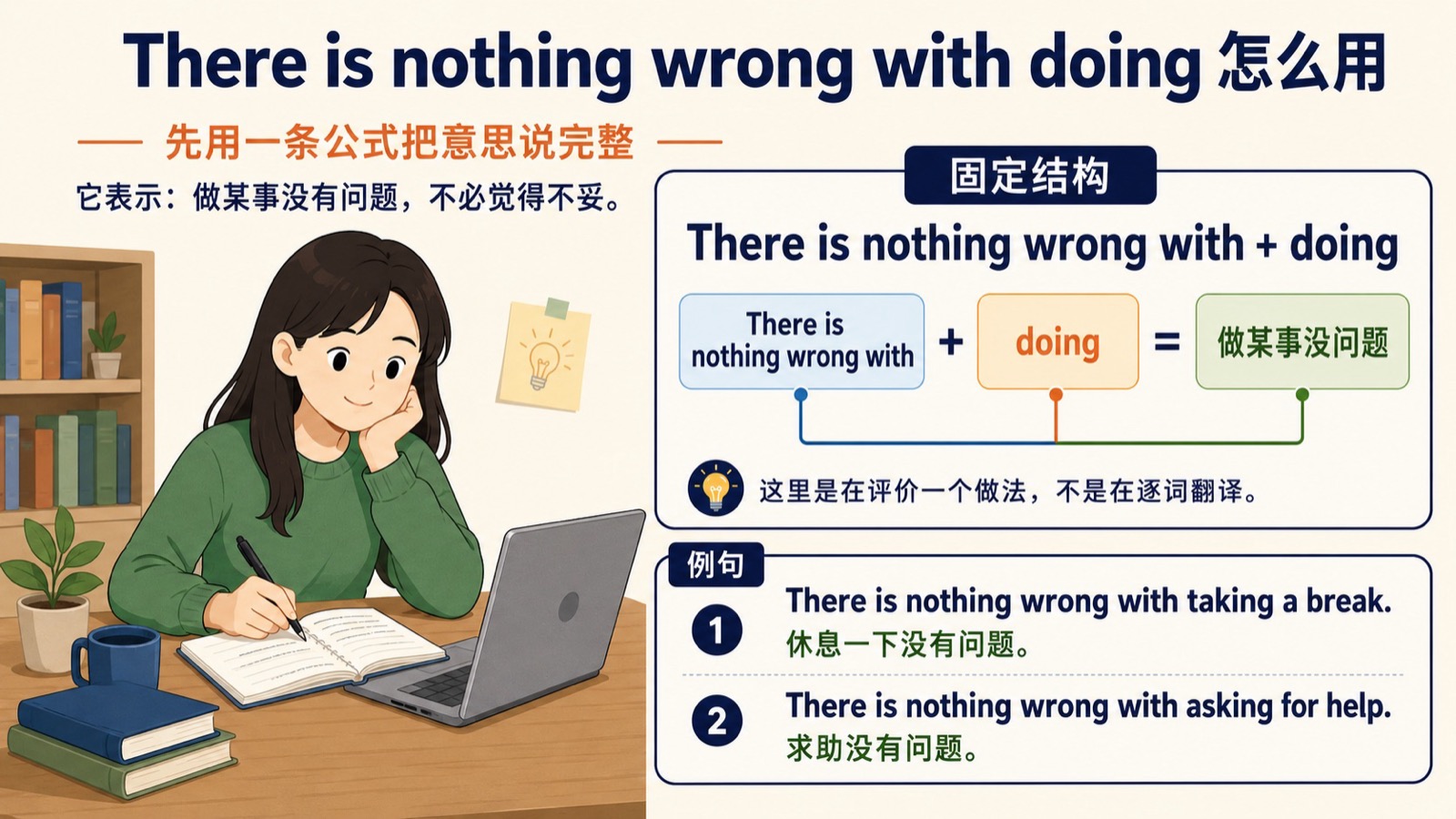
there is nothing wrong with doing something 的意思是“做某事没有问题,不必觉得不妥”。最实用的公式是 There is nothing wrong with + 名词、代词或 doing。你不只要记住 with 后接 doing,还要能把它和 There is nothing to do 分开,前者在评价一个做法,后者是在说没有事情可做。
先用一条公式把意思说完整
There is nothing wrong with + 名词 / 代词 / doing something.这句话不是在说“什么东西都不对”,而是在给一个做法、选择或状态作判断:它不算错误、不合适或不应当。
There is nothing wrong with your plan.
你的计划没有问题。

There is nothing wrong with it.
这件事没有问题。

There is nothing wrong with taking a break.
休息一下没有问题。
wrong 可以表示“不正确、不合适或有问题”。在这个结构里,nothing wrong 的重点就是“没有需要挑出来的问题”。所以它很适合安慰、给建议,或礼貌地表达认可。
第 1 步,先判断你是在评价什么
如果你想评价的是一个具体东西,with 后面放名词或代词。
There is nothing wrong with this sentence.
这个句子没有问题。

There is nothing wrong with her idea.
她的想法没有问题。
如果你想评价的是“做某件事”本身,就把动作变成 doing。
There is nothing wrong with asking questions.
提问题没有问题。

There is nothing wrong with saying no.
说不没有问题。

There is nothing wrong with being quiet.
安静一点没有问题。
这一步能避免一个常见误会:中文里的“没问题”不一定是在评价某个物品,也可能是在认可一个动作。动作才是你要放在 with 后面的内容。
第 2 步,记住 with 后面为什么用 doing
with 在这里是介词。要把一个动作放到介词后面,英语通常用动词的 -ing 形式,也就是 doing、asking、taking 这种形式。
There is nothing wrong with practicing every day.
每天练习没有问题。

There is nothing wrong with taking your time.
慢慢来没有问题。
所以,下面两种说法不要当成这个句型的标准表达:
Wrong: There is nothing wrong doing it.
Wrong: There is nothing wrong to do it.

Better: There is nothing wrong with doing it.你可以用一个小检查来选:with 后面说的是一个动作吗?如果是,就先把动词改成 -ing。这比死记整句更容易迁移到 asking、taking、being、trying 等新场景。
第 3 步,别把它和 there is nothing to do 混在一起
这两个结构都出现 there is nothing,但它们回答的不是同一个问题。
| 你想表达什么 | 正确结构 | 例句 |
|---|---|---|
| 评价一个做法没有问题 | There is nothing wrong with doing... | There is nothing wrong with taking a day off. |
| 没有事情可做 | There is nothing to do. | There is nothing to do after class. |
There is nothing wrong with taking a day off 的意思是“请一天假没有什么不妥”。它在评价请假的做法。
There is nothing to do after class 的意思是“下课后没什么事可做”。它在说事情不存在,不是在评价一个选择。
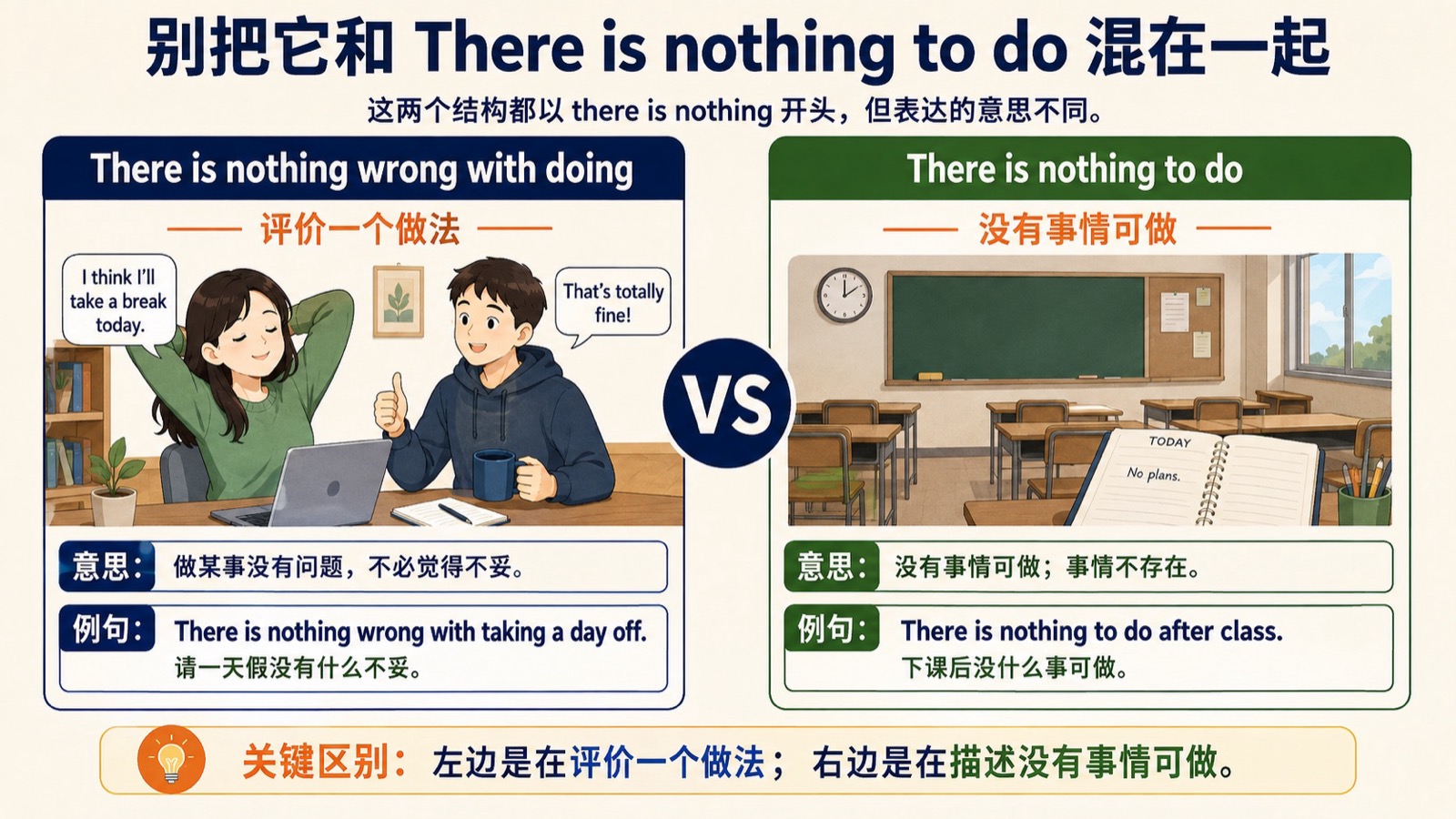
如果你原来想说“做某事没问题”,却说成 There is nothing to do,对方会理解成“没事可做”,意思就跑偏了。想进一步练“没有什么可做、可说、可看的”表达,可以看 there is nothing to do 句型。
3 组日常场景,直接套进去说
休息和安排自己
There is nothing wrong with taking a break.
休息一下没有问题。

There is nothing wrong with spending the weekend at home.
周末待在家里没有问题。
学习和提问
There is nothing wrong with making mistakes.
犯错没有问题。

There is nothing wrong with asking for help.
求助没有问题。
表达边界和选择
There is nothing wrong with saying no.
说不没有问题。

There is nothing wrong with changing your mind.
改变主意没有问题。
这些例句的共同点是,后半句都是一个被评价的动作。你可以先说完整的 There is nothing wrong with,再补上想认可的做法。
它是在表达认可,不是替你作事实保证
There is nothing wrong with ... 是说话人对某个做法的判断,语气通常是安慰、支持或缓和。它不自动等于“任何情况下都允许”或“所有人都会同意”。
比如:
There is nothing wrong with asking for feedback.
征求反馈没有问题。
这句话是在认可“征求反馈”这个动作。至于该向谁问、什么时候问、是否符合具体规则,仍要看场景。这样理解,你就不会把一个日常评价句误当成绝对结论。
用 2 分钟把句型变成自己的话
不要只看懂 with + doing。你可以做三轮替换:
- 先读出固定开头:
There is nothing wrong with ... - 选一个自己的动作:asking questions、taking a break、saying no。
- 换一个真实场景,再完整说一遍。
在 Video Language Learn 里,可以把这三句放进单句循环,先听清节奏,再跟读;最后做一次全句听写练习,检查自己会不会在 with 后面误用 to do。这比只背中文翻译更容易在开口时拿出来用。
小结
想说“做某事没问题”,先用:
There is nothing wrong with doing something.记住两件事就够了:with 后面接 doing,这句话是在评价一个做法。它不等于 There is nothing to do,后者只是“没有事情可做”。
FAQ
there is nothing wrong with doing 怎么用?
用 There is nothing wrong with + 名词、代词或 doing,表达某件事没有问题。例如 There is nothing wrong with asking for help.,意思是“求助没有问题”。
为什么 with 后面是 doing,不是 to do?
因为 with 是介词。把动作放在介词后面时,通常用动词的 -ing 形式,所以说 with asking、with taking,而不是 with to ask、with to take。
there is nothing wrong with doing 和 there is nothing to do 有什么区别?
前者是在评价一个做法,意思是“做这件事没问题”。后者是在说没有事情可做,意思是“没什么可做的”。
参考资料
Practice Next
用真实视频练一次这个知识点
读懂规则后,选一段真实英文视频,把这个表达放回声音、字幕、跟读和听写里,才更容易变成主动表达。