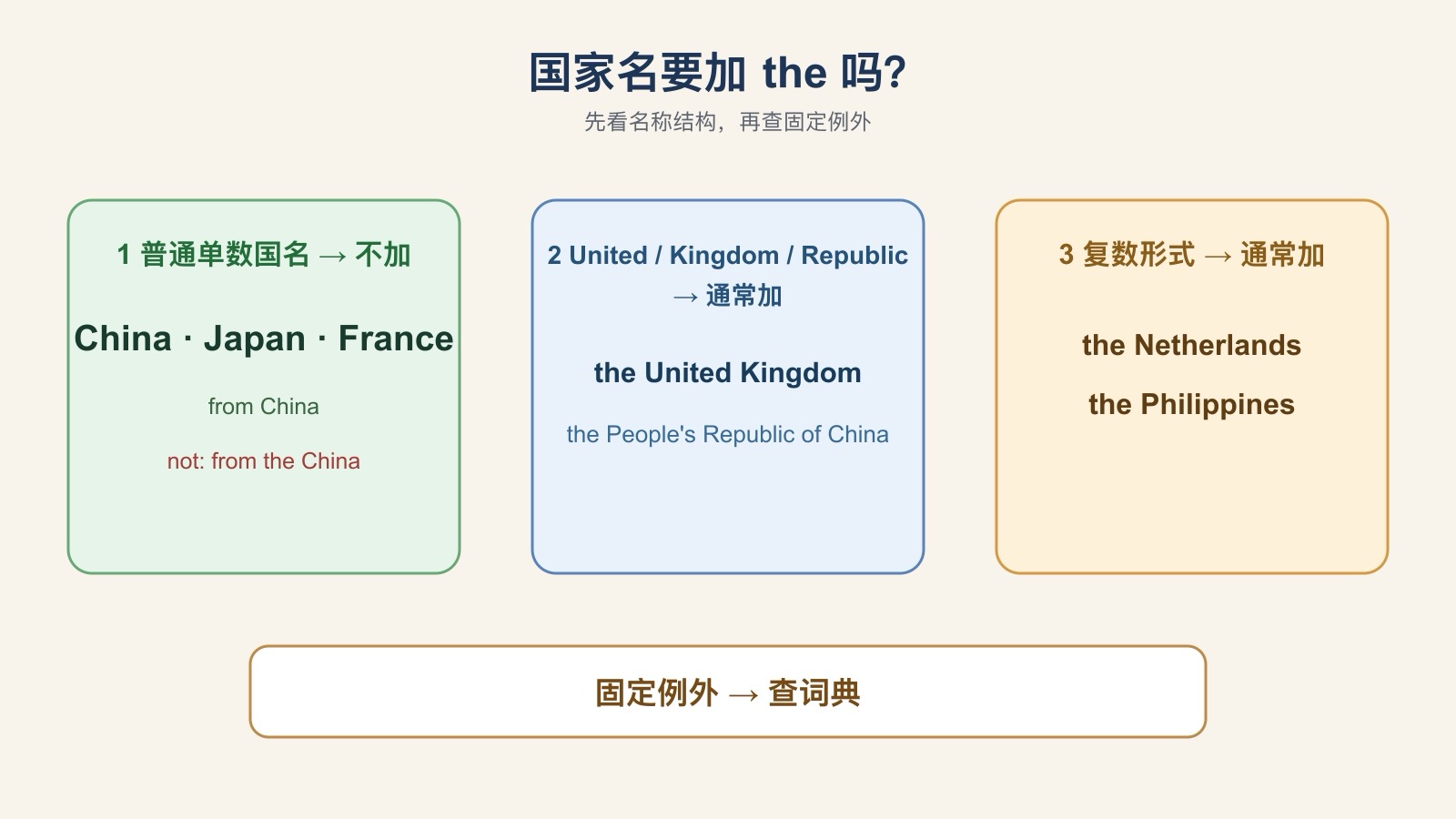
国家名要加 the 吗?先记结论:大多数单数国名直接说,不加 the,所以是 China、Japan、France,不是 the China。但国名里带有 United、Kingdom、Republic 等普通名词,或国名本身是复数形式时,通常要加 the,例如 the United Kingdom、the United States、the Netherlands。最稳的办法不是死背一长串名单,而是按名称结构先判断,再把固定例外查清楚。
先用 3 步判断
第 1 步:它是不是普通的单数国名?
如果只是一个普通单数国名,通常不加 the:
| 正确 | 常见错误 |
|---|---|
| I am from China. | I am from the China. |
| She lives in Japan. | She lives in the Japan. |
| They travelled to France. | They travelled to the France. |
这里最容易误会的一点是:不能用“这个国家只有一个,所以不用 the”来解释。the 不是 this 或 that 的缩写,也不是拿来判断世界上有几个同名国家的工具。对国名来说,先看英语里这个名称的常规结构,才是可靠判断。
第 2 步:名称里有没有表示国家结构的普通名词?
完整名称里出现 United、Kingdom、Republic 这类结构时,通常用 the。最常见的四组,先整块记住:
要用 the | 为什么不能漏 |
|---|---|
| the United Kingdom | 名称里有 Kingdom |
| the United States | 名称里有 States |
| the United Arab Emirates | 名称里有 Emirates |
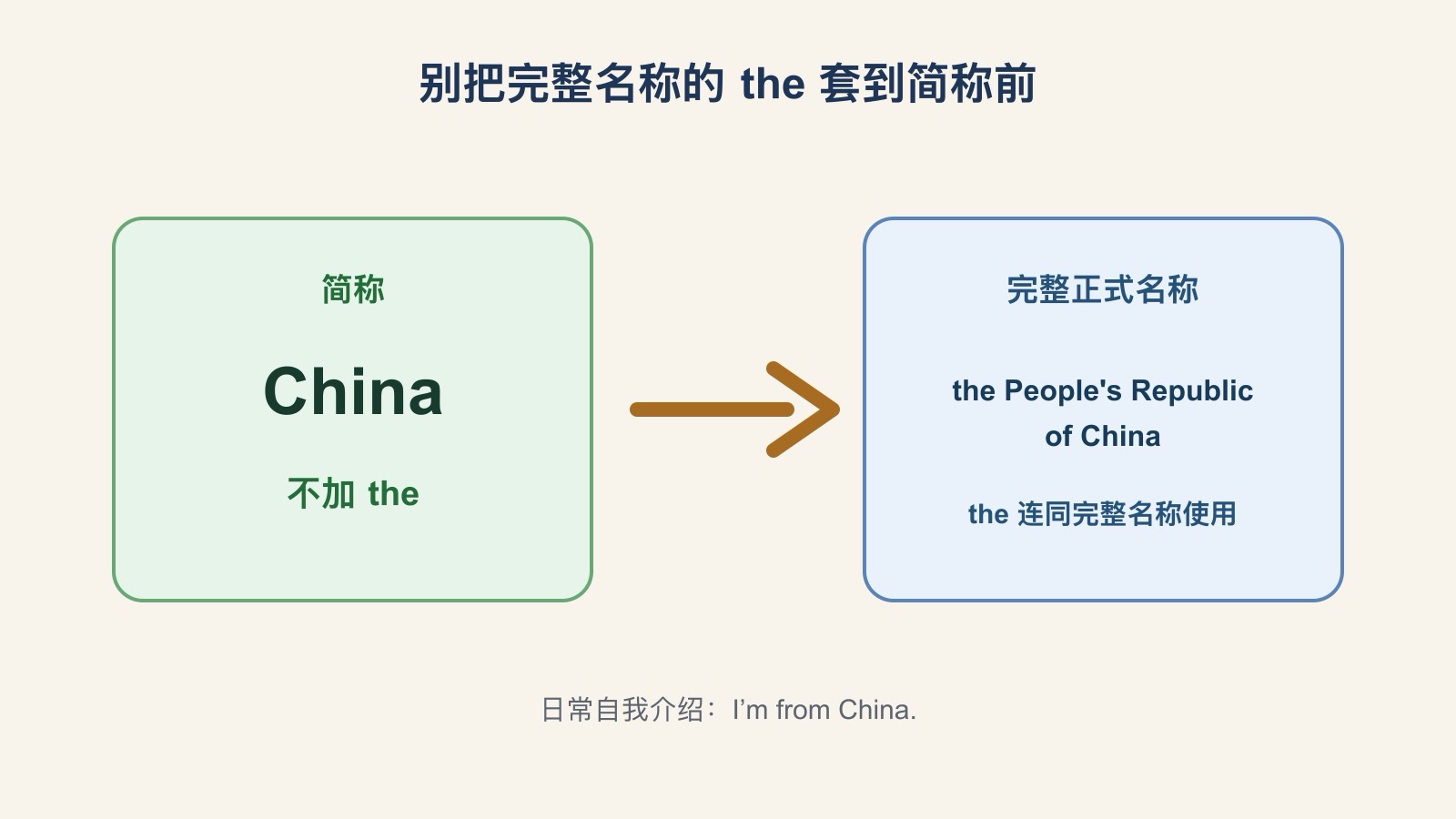
| the People’s Republic of China | 这是完整正式名称,不等于简称 China |
因此,下面两句话都对,但它们不是同一个名称:
- China is a large country.
- The People’s Republic of China is the full official name used in some formal contexts.
日常自我介绍、旅行对话里,直接说 China 就够了。只有你真的使用完整名称时,才把 the 连同整个名称一起说出来。
第 3 步:国名是不是复数形式?
复数形式的国名通常带 the。这些例子比规则本身更值得整块记:
- the Netherlands
- the Philippines
- the Bahamas
所以说 I live in the Netherlands.,不要漏成 I live in Netherlands.。看到词尾的 -s 可以提醒你检查一下,但不要把“结尾有 s”当成万能公式,例如 Wales 仍然通常不加 the。不确定时,查词典或可靠语法资料,比凭词尾猜更稳。
一张最小对照表,先把高频错误改掉
| 场景 | 正确说法 | 不推荐说法 | 判断点 |
|---|---|---|---|
| 介绍来自中国 | I’m from China. | I’m from the China. | 普通单数国名 |
| 说去日本旅行 | I went to Japan. | I went to the Japan. | 普通单数国名 |
| 说住在荷兰 | I live in the Netherlands. | I live in Netherlands. | 复数形式国名 |
| 说来自菲律宾 | She is from the Philippines. | She is from Philippines. | 复数形式国名 |
| 说英国 | He works in the United Kingdom. | He works in United Kingdom. | 完整名称含 Kingdom |
| 说美国 | They moved to the United States. | They moved to United States. | 完整名称含 States |
你不需要先背全世界所有国名。先把这六组放进句子里读顺,遇到新的国名再做一次结构检查,效率更高。
哪些情况别硬套?
the Gambia 是固定例外
the Gambia 常被列为需要单独记住的固定用法。它提醒我们:规则能帮你覆盖大多数情况,但国名仍然有约定俗成的例外。碰到一个你没见过的国家名称时,别为了“猜对规则”硬说,先查一次可靠词典或语法资料。
不要把国名规则扩展到所有地名
本篇只解决国名。河流、海洋、山脉、群岛、城市和机构名称各有自己的冠词习惯,例如 the Pacific、the Himalayas 的 the 并不能直接拿来推导国名。你看到的是地名时,先确认它到底是国家、城市、河流还是群岛。
自我介绍时,直接这样练
把下面四句连起来读三遍,先让正确形式变成口头习惯:
- I’m from China. 我来自中国。
- My friend is from the Netherlands. 我的朋友来自荷兰。
- She works in the United States. 她在美国工作。
- They travelled around the Philippines. 他们在菲律宾各地旅行。
如果你用真实英文视频练习,可以先在 [[features/vocabulary|真实句子里的词汇积累]] 中收集国家和旅行表达,再用 [[features/sentence-loop|单句循环播放]] 把整句读顺。学习时按 [[glossary/chunks|短语块]] 记住 from China、in the Netherlands,比孤立背一条冠词规则更容易在开口时用对。
FAQ
国家名要加the吗?
大多数单数国名不加 the,例如 China、Japan、France。名称含 United、Kingdom、Republic 等普通名词,或国名是复数形式时,通常加 the,例如 the United Kingdom、the United States、the Netherlands。
China 前面为什么不用 the?
China 是日常使用的普通单数国名,通常直接用。the People's Republic of China 是完整正式名称,不能因为完整名称有 the,就把 the 加到简称 China 前。
the Netherlands 为什么有 the?
Netherlands 是复数形式的国名,英语通常在这类国名前用 the。the Philippines 和 the Bahamas 也是常见例子。
国家名后面用 in 还是 to?
表达所在地用 in,例如 I live in China.;表达目的地用 to,例如 I went to Japan.。如果国名本身要带 the,冠词仍保留:in the Netherlands、to the United States。
参考资料
- British Council LearnEnglish:The definite article
- British Council LearnEnglish:Articles: the or no article
- Cambridge Grammar:Countries, nationalities and languages
Practice Next
用真实视频练一次这个知识点
读懂规则后,选一段真实英文视频,把这个表达放回声音、字幕、跟读和听写里,才更容易变成主动表达。