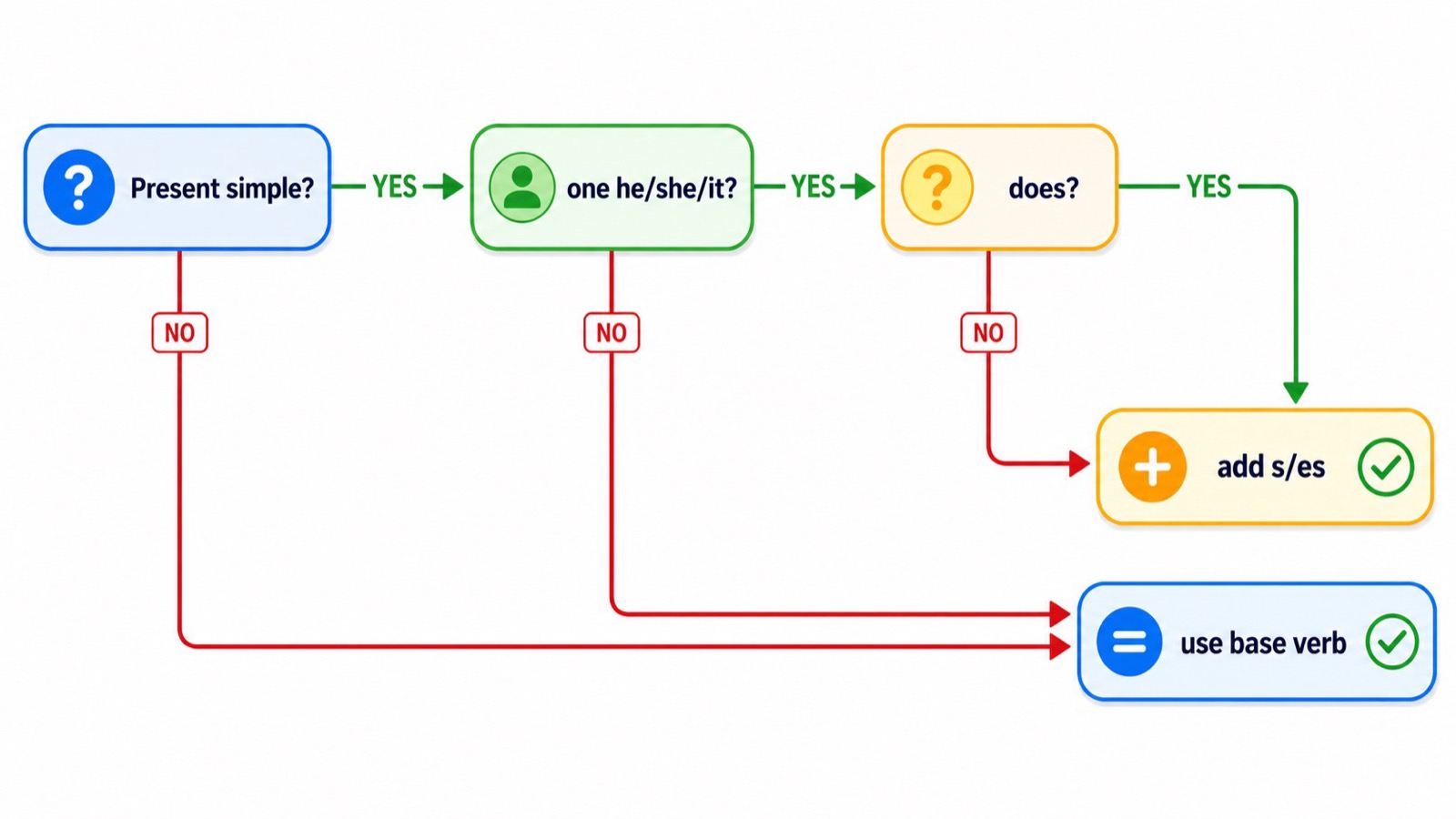
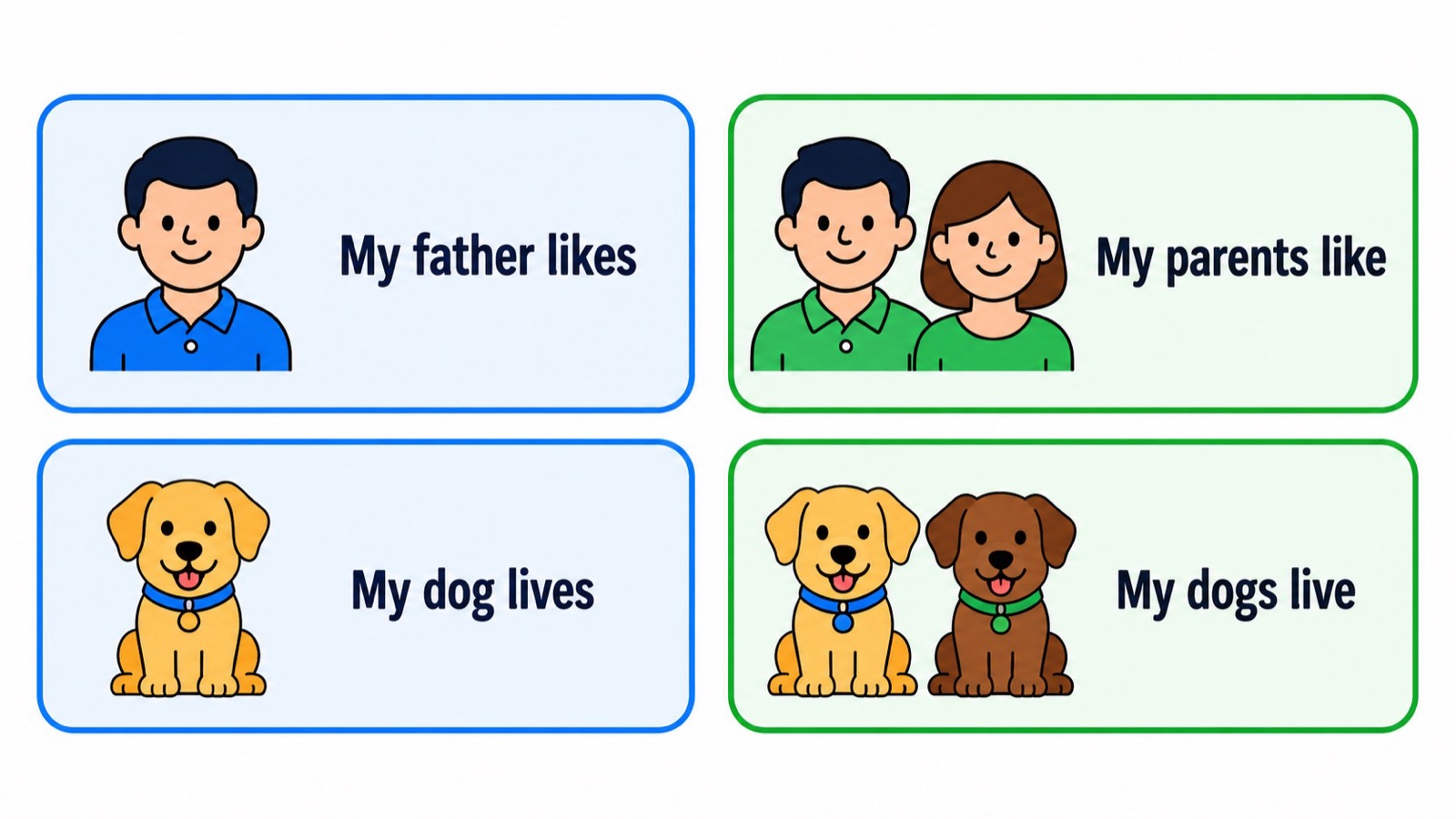
英语三单的判断不是先背一串主语,而是问 3 个问题:这是不是一般现在时?主语是不是“一个他、她、它”?句子里有没有 does?如果是一般现在时肯定句,主语又等同于一个 he / she / it,普通动词才加 s 或 es。所以是 My father likes this dog.,但 My parents like this dog.
三单到底在说什么
“三单”是中文课堂里对 third person singular 的简称,放到初学者真正要造句的场景里,可以先理解成:
第三人称单数 = 一个不是“我”和“你”的人或物最典型的是:
he
she
it
但考试和口语里更容易出错的不是这 3 个词,而是这些主语:
| 主语 | 背后是谁 | 动词 |
|---|---|---|
| my father | he | likes |
| my mother | she | likes |
| my dog | it | likes |
| this city | it | changes |
| the teacher | he 或 she | teaches |
| my parents | they | like |
| my sister and my mother | they | live |
所以判断三单时,不要只盯着单词表里的 he、she、it。你要看主语背后到底是“一个他她它”,还是“多个他们”。
3 步判断动词要不要加 s
第 1 步,先确认是不是一般现在时
三单加 s 主要发生在一般现在时,用来表达习惯、日常状态、一般事实或现在认为成立的事情。
I live in Chengdu.
我住在成都。

My father lives in Chengdu.
我爸爸住在成都。
如果你在说过去发生的事,就不是这个规则:
My father lived in Chengdu before.
我爸爸以前住在成都。
这时动词已经是过去式 lived,不要再想三单加 s。
第 2 步,看主语是不是“一个他她它”
把主语翻译成代词来判断:
my father = he
my mother = she
my dog = it
the city = it
这些都是第三人称单数,所以一般现在时肯定句里动词要变化:
My father likes this dog.
My mother likes this dog.
My dog likes this toy.
This city changes fast.
再看复数:
my parents = they
my dogs = they
my sister and my mother = they
my father, my mother and I = we
这些不是单数,所以动词不加 s:
My parents like this dog.
My dogs like this toy.
My sister and my mother live in Chengdu.
My father, my mother and I live in Chengdu.
你可以先用一句粗暴但有效的话检查:
能不能换成 he / she / it?
能,就考虑加 s。不能,就先别加。
第 3 步,看句子里有没有 does
很多人知道 My father likes...,但一到问句和否定句就写成:
Wrong: Does my father likes this dog?
Wrong: My father doesn't likes this dog.这两个错在重复标记三单。does 已经替主语完成了三单变化,后面的主要动词要回到原形:
Does my father like this dog?
My father doesn't like this dog.
可以这样记:
肯定句:My father likes this dog.
疑问句:Does my father like this dog?
否定句:My father doesn't like this dog.
三单的 s 不是每次看到第三人称都往动词后面贴。它只放在没有助动词 does 的一般现在时肯定句主要动词上。
s、es、ies 怎么选
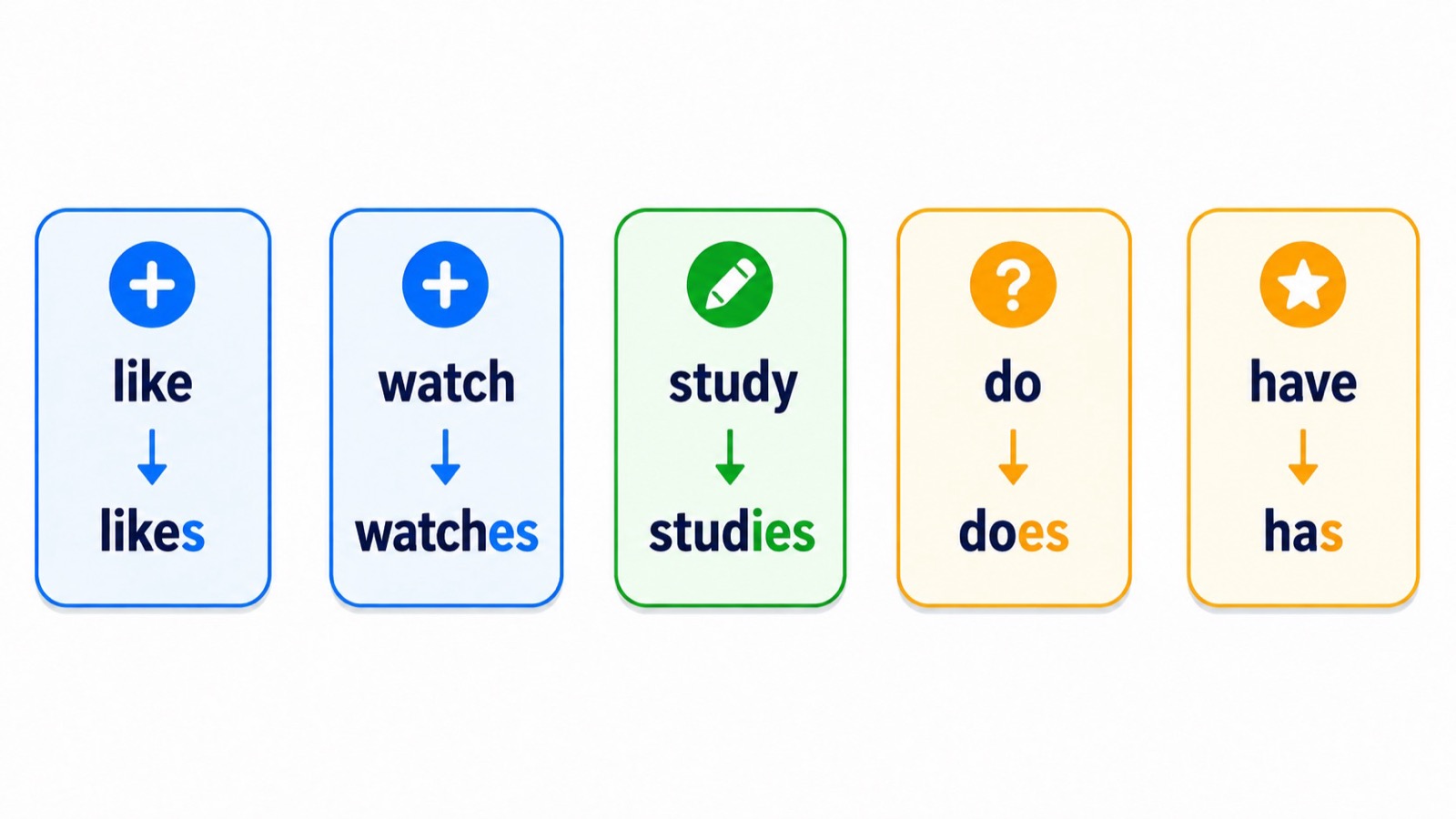
判断完“要不要加”,再看“怎么加”。
| 动词原形 | 三单形式 | 规则 |
|---|---|---|
| like | likes | 大多数动词直接加 s |
| live | lives | 大多数动词直接加 s |
| watch | watches | ch 结尾常加 es |
| wash | washes | sh 结尾常加 es |
| fix | fixes | x 结尾常加 es |
| go | goes | go 变 goes |
| do | does | do 变 does |
| study | studies | 辅音字母 + y,变 y 为 i 再加 es |
| play | plays | 元音字母 + y,直接加 s |
| have | has | have 变 has |
| be | is | be 在三单里是 is |
初学阶段最常用的不是背完整拼写表,而是先把高频动词练熟:
like -> likes
live -> lives
watch -> watches
study -> studies
go -> goes
do -> does
have -> has
be -> is
最容易错的 5 类主语
1. my father / my mother 这类亲属
My father likes this dog.
My mother lives in Chengdu.
My sister studies English every day.
虽然句子里没有 he、she,但这些主语都等同于一个 he 或 she。
2. my parents / my dogs 这类复数
My parents like this dog.
My dogs live with me.
parents 和 dogs 都是复数,背后是 they,不加 s。
3. A and B 连接的两个主语
My sister and my mother live in Chengdu.
My dog and my cat like this sofa.
两个主语加在一起就是复数。不要因为每个单独看都是第三人称,就写成 lives 或 likes。
4. A, B and I
My mother, my father and I live in Chengdu.主语里有 I,而且是一群人,整体等同于 we,所以不加 s。
5. this dog / this city / the lesson
This dog likes the toy.
This city changes fast.
The lesson starts at eight.
物、动物、城市、课程这些不是人,但如果是单数,都可以等同于 it。
用 like 和 live 做一组判断练习
先只判断主语,不急着翻译整句。
| 中文 | 主语判断 | 英文 |
|---|---|---|
| 我喜欢这只狗 | I,不是三单 | I like this dog. |
| 我爸爸喜欢这只狗 | my father = he | My father likes this dog. |
| 我妈妈喜欢这只狗 | my mother = she | My mother likes this dog. |
| 我爸妈喜欢这只狗 | my parents = they | My parents like this dog. |
| 我住在成都 | I,不是三单 | I live in Chengdu. |
| 我妹妹住在成都 | my sister = she | My sister lives in Chengdu. |
| 我妹妹和妈妈住在成都 | 两个人 = they | My sister and my mother live in Chengdu. |
| 我的狗住在成都 | my dog = it | My dog lives in Chengdu. |
| 我的狗们住在成都 | my dogs = they | My dogs live in Chengdu. |
练的时候要刻意放慢一拍,先把主语写在左边,再在脑子里换成 he、she、it、they 或 we。这个动作比背口诀更重要。
常见错误
错误 1,看到第三人称就加 s,不看单复数
Wrong: My parents likes this dog.
Right: My parents like this dog.
parents 是复数,等同于 they。
错误 2,问句和否定句重复加 s
Wrong: Does she likes this dog?
Right: Does she like this dog?

Wrong: She doesn't likes this dog.
Right: She doesn't like this dog.
有 does,后面的动词回原形。
错误 3,把 be 动词也套 like 的规则
Wrong: She bes happy.
Right: She is happy.
be 有自己的形式。现在时里常见的是 I am、you/we/they are、he/she/it is。
错误 4,把情态动词后面的动词加 s
Wrong: She can likes this dog.
Right: She can like this dog.
can / must / should 这类情态动词后面接动词原形,不再加三单 s。
一句话判断法
每次写一般现在时,都按这个顺序走:
1. 这是一般现在时吗?
2. 主语能换成一个 he / she / it 吗?
3. 句子里有没有 does、can、must、should 这类已经管住动词的词?
如果答案是:
一般现在时 + 一个 he/she/it + 肯定句普通动词动词就加 s/es:
My father likes this dog.
My sister lives in Chengdu.
This lesson starts at eight.
如果主语是复数,或句子里已经有 does,就别再给主要动词加 s。
下一步练习
找一段真实英文视频,不要先整段跟读,先截出 5 个一般现在时句子。每一句只做 3 件事:
- 圈出主语。
- 判断主语能不能换成 he、she、it。
- 把肯定句、疑问句、否定句各改写一遍。
在 Video Language Learn 里,你可以用单句循环反复听同一句,再用听写检查自己有没有漏掉 likes、lives、doesn't like 里的词尾和助动词。三单不是靠看懂规则就结束,真正要练的是听到、写出、再开口说对。
FAQ
英语三单怎么判断?
先确认句子是一般现在时,再看主语是不是第三人称单数,也就是一个 he、she、it,或等同于一个他她它的人、动物、物品、机构或概念。是的话,肯定句里的普通动词通常加 s 或 es,例如 My father likes this dog.
my parents like 还是 likes?
要说 My parents like this dog.。parents 是复数,等同于 they,不是一个 he/she/it,所以动词用 like,不加 s。
does 后面动词还加 s 吗?
不加。疑问句和否定句已经用 does 表示第三人称单数,后面的主要动词回到原形,例如 Does your father like this dog? 和 My father doesn't like this dog.
have 的三单是 haves 吗?
不是。have 的第三人称单数是 has,例如 She has a dog. 如果是疑问句,要说 Does she have a dog?,不是 Does she has a dog?
参考资料
- British Council LearnEnglish: Present simple, https://learnenglish.britishcouncil.org/free-resources/grammar/english-grammar-reference/present-simple
- British Council LearnEnglish Teens: Present simple, https://learnenglishteens.britishcouncil.org/grammar/a1-a2-grammar/present-simple
- Cambridge Dictionary, English Grammar Today: Present simple, https://dictionary.cambridge.org/grammar/british-grammar/present-simple
Practice Next
把这套方法放进一个真实视频里练
学习指南的价值不在收藏,而在马上完成一次训练。选一集真实英文视频,从盲听、逐句精听、跟读或听写开始。