“舌头打结”如果是指紧张到话说不顺,最自然的英语是 get tongue-tied,例如 I get tongue-tied in interviews. 不要写成 tongue tie,因为 tongue-tie 是医学名词。要是你是被消息震住、惊讶得说不出话,才更接近 be lost for words。下面直接用面试、演讲和见到喜欢的人 3 个场景,把能开口的句子和易错边界分清。

最稳妥的说法:get tongue-tied
tongue-tied 是形容词,表示一个人通常因为紧张而难以把话说出来、表达不顺。说“我一紧张就舌头打结”时,常用结构是:
get tongue-tied + 场景直接记这 3 句:
I get tongue-tied in interviews.
我面试时会紧张到说不顺。

I got tongue-tied during the presentation.
我演讲时紧张得卡壳了。

She gets tongue-tied when she speaks in front of a crowd.
她在很多人面前说话时容易紧张到表达不顺。
这里的重点不是“舌头真的被绑住”,而是紧张让表达卡住。所以 get tongue-tied 很适合面试、演讲、初次见面、当众发言这些场景。
见到喜欢的人,说不出话怎么说?
如果你想说“我一见到喜欢的人就舌头打结”,可以说:
I get tongue-tied when I see someone I like.
我一见到喜欢的人就紧张得说不顺。

I was so nervous that I got tongue-tied.
我太紧张了,话都说不利索。
第二句很好用,因为它先说原因,再说结果。你也可以把场景替换进去:
I got tongue-tied when the interviewer asked me that question.
面试官问那个问题时,我一下子卡壳了。

Don't worry if you get tongue-tied at first.
刚开始说不顺也别担心。
别把 tongue-tied 写成 tongue-tie
这两个词只差一个连字符和词尾,意思却不是一回事。
| 你想表达什么 | 应该用什么 | 例句 |
|---|---|---|
| 紧张到表达不顺 | tongue-tied | I get tongue-tied in interviews. |
| 医学上的舌系带问题 | tongue-tie | 这是医学术语,不用于普通的紧张卡壳。 |
所以不要把“我演讲时舌头打结”写成 I have tongue-tie during a speech. 这会把口语里的紧张,误说成医学状况。
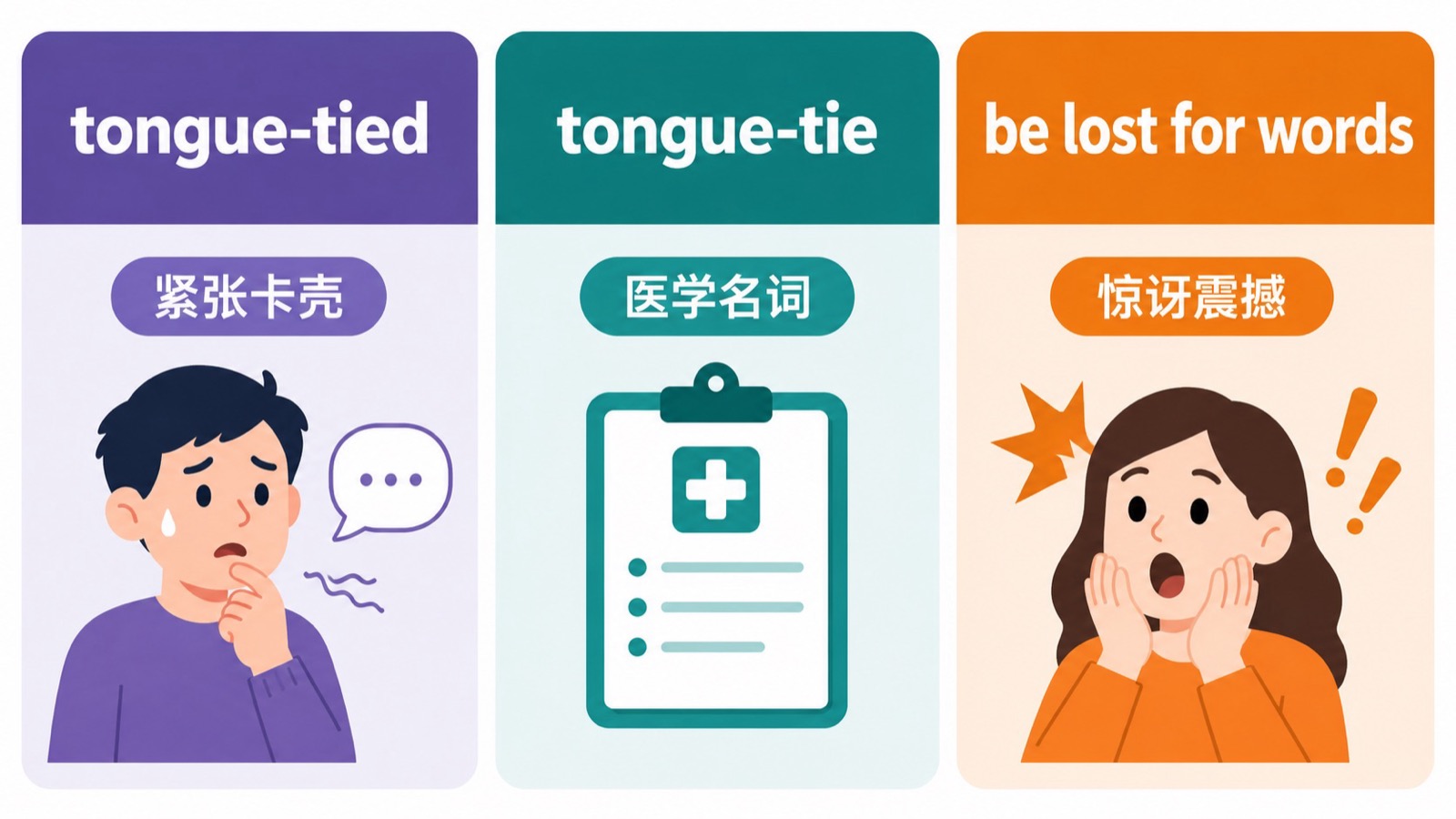
tongue-tied 和 be lost for words,什么时候选哪个?
两者都可能被翻成“说不出话”,但卡住的原因不同。
| 场景 | 更贴切的表达 | 为什么 |
|---|---|---|
| 面试、演讲、和陌生人说话时紧张 | tongue-tied | 重点是紧张导致表达不顺。 |
| 听到突发消息,震惊或感动得一时无话 | lost for words | 重点是惊讶、震撼或赞叹。 |
I was tongue-tied during my interview.
我面试时紧张得说不顺。

I was lost for words when I heard the news.
我听到那个消息时震惊得说不出话。
因此,搜索“舌头打结英语怎么说”时,不要把 be lost for words 当成 tongue-tied 的万能替换。前者适合情绪冲击,后者更贴近紧张卡壳。
3 步把这类句子练成能开口的短语块
知道释义不等于临场能说出来。可以把 get tongue-tied 当成一个完整短语块,按下面 3 步练:
- 先只读短语:
get tongue-tied,不要逐个翻译单词。 - 再换场景:
in interviews、during a presentation、when I see someone I like。 - 最后用自己的经历造一句,例如
I got tongue-tied when I introduced myself in English.
在 Video Language Learn 里,可以挑一句短英文原声,先盲听,再用单句循环跟读,最后做一次挖空或全句听写。重点不是一次说得很快,而是把 get tongue-tied 连同后面的场景一起练到顺口。
常见错误
错误 1:写成 tongue tie
Wrong: I get tongue tie in interviews.
Better: I get tongue-tied in interviews.
你这里需要的是形容“我”的 tongue-tied,不是医学名词 tongue-tie。
错误 2:只说 I am tongue-tied,却没交代场景
I'm tongue-tied. 单独说没有错,但加上场景会更自然,也更容易让对方理解你为什么说不顺。
I'm tongue-tied when I have to speak English in public.
当我必须当众说英语时,我就会紧张到说不顺。
错误 3:紧张和震惊都一律说 lost for words
如果你是被面试官盯着紧张,优先说 tongue-tied。如果你是因为获奖、听到消息、看到很震撼的事而没话说,再考虑 lost for words。
下一步:用一句真实原声把它练顺
先把 I get tongue-tied in interviews. 录下来,听一遍自己的停顿,再换成你的真实场景。接着用一段 10 到 20 秒的英文视频做单句循环和影子跟读,把这类“原因 + 卡住结果”的短语块练成反应,而不只是看懂解释。
常见问题
舌头打结英语怎么说?
紧张到话说不顺,最常用的是 get tongue-tied。例如:I get tongue-tied in interviews.
tongue-tied 是动词吗?
不是。它常作形容词,用在 be tongue-tied 或 get tongue-tied 这类结构里。
tongue-tied 可以用于演讲吗?
可以。比如 I got tongue-tied during the presentation. 表示演讲时因为紧张而表达不顺。
参考资料
- Cambridge Dictionary: tongue-tied
- Cambridge Dictionary: tongue-tie
- Cambridge Dictionary: be lost for words
Practice Next
用真实视频练一次这个知识点
读懂规则后,选一段真实英文视频,把这个表达放回声音、字幕、跟读和听写里,才更容易变成主动表达。