ing和ed形容词区别不要先按“人还是物”判断。更稳的办法是看语境里的感觉方向:-ing 常表示“让别人产生这种感觉”,-ed 常表示“自己感受到这种感觉”。所以 a boring person 和 an excited dog 都自然,因为前者是让人无聊的人,后者是感到兴奋的狗。
一句话先判断:看谁让谁有感觉
遇到 boring/bored、interesting/interested、exciting/excited 这类词,先不要问“修饰人还是修饰物”。按这 3 步判断。
- 找出这个词背后的感觉,例如 bored 是无聊,excited 是兴奋。
- 问主语或被修饰名词,是不是让别人产生这个感觉。
- 如果它是感觉来源,优先用
-ing;如果它是感受者,优先用-ed。
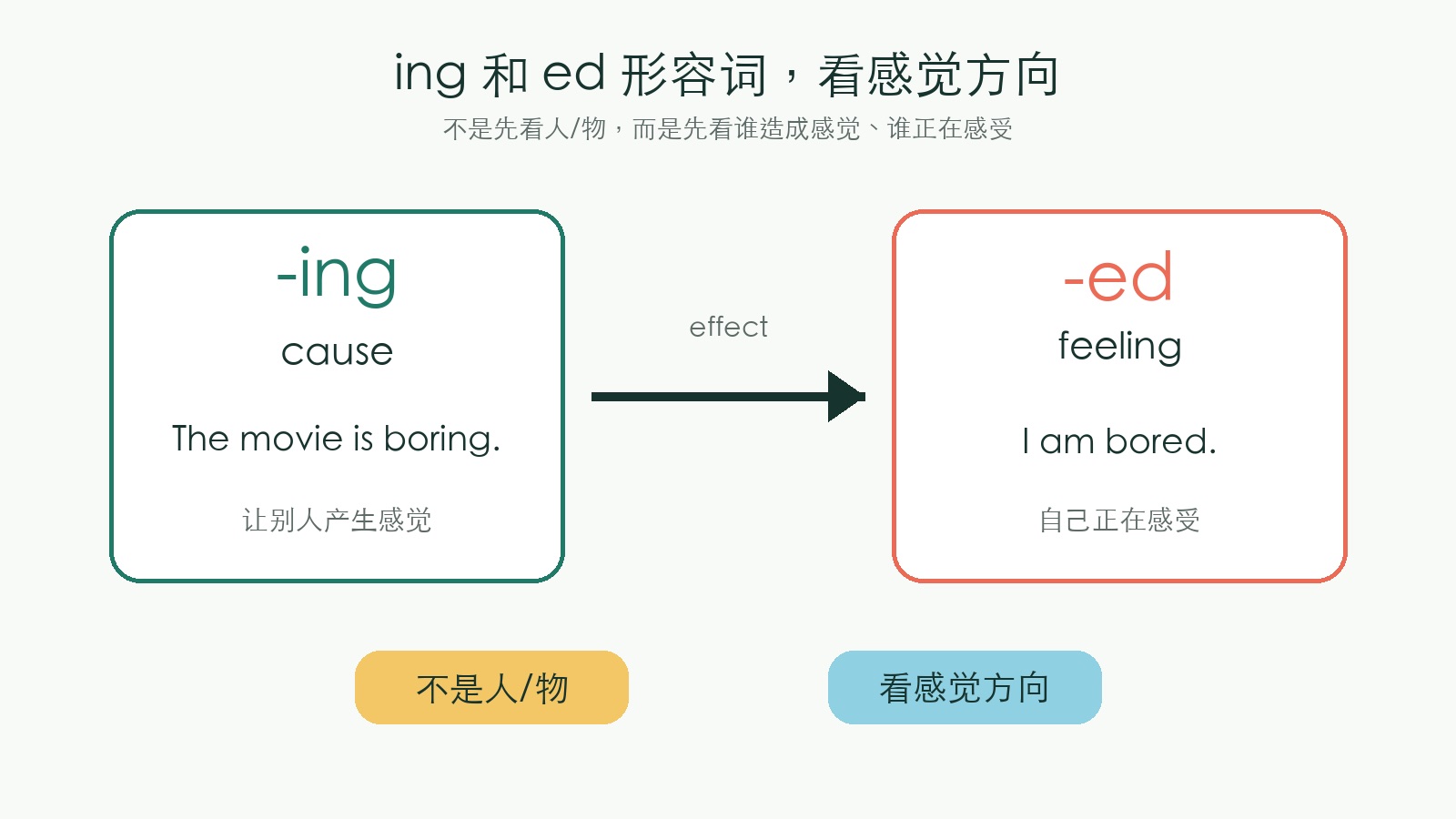
你可以先记这个判断句:
-ing= causing the feeling
-ed= feeling it
这不是说所有 -ing 和 -ed 词都只表达情绪,但对英语学习者最容易混淆的这一组 feeling adjectives,很好用。
为什么“人用 ed、物用 ing”会误导你
这个口诀在一些最基础例句里看起来对。
| 中文想法 | 英文 | 判断 |
|---|---|---|
| 我觉得无聊 | I am bored. | 我是感受者,用 -ed |
| 这部电影很无聊 | The movie is boring. | 电影让人无聊,用 -ing |
问题是,英语里人也可以成为感觉来源,动物和物也可以成为感受者。
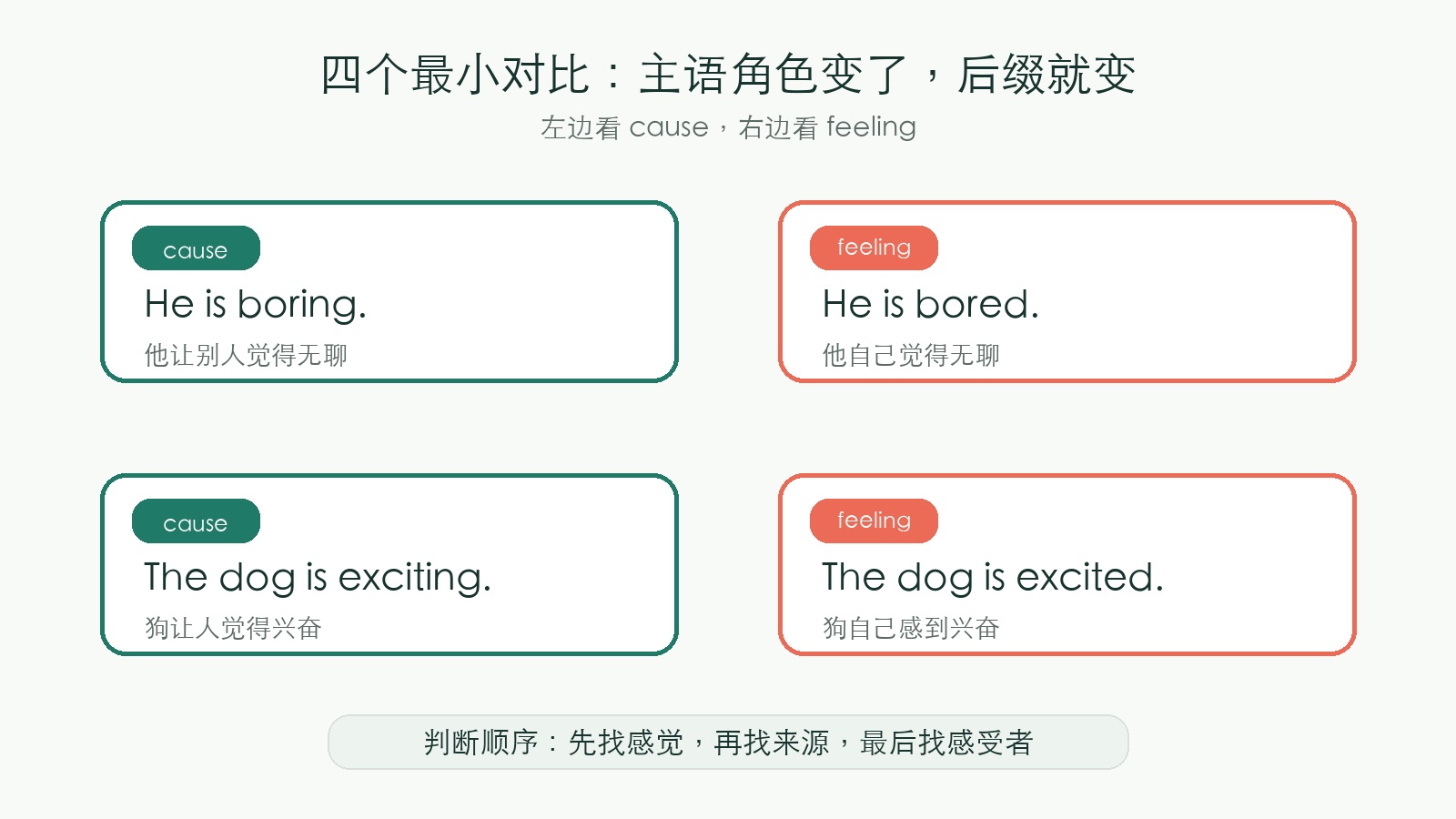
He is boring.
他让别人觉得无聊。
He is bored.
他自己觉得无聊。
The dog is excited.
狗感到兴奋。
The dog is exciting.
这只狗让人觉得兴奋,刺激,或很有看头。
你看,真正改变意思的不是人或物,而是这个名词在句子里扮演的角色:它是在制造感觉,还是在体验感觉。
boring 和 bored:先问“谁无聊”
bored 描述感受者。Oxford Learner’s Dictionaries 对 bored 的解释重点就是一个人因为失去兴趣或无事可做而感到厌倦。比如:
I was bored during the lesson.
我上课时觉得无聊。
She looked bored.
她看起来很无聊。
boring 描述让人产生这种感觉的来源。Cambridge Dictionary 给 boring 的核心解释是“不有趣、不令人兴奋”。比如:
The lesson was boring.
这节课很无聊。
That was a boring movie.
那是一部无聊的电影。
把两句话连起来看就更清楚:
The movie was boring, so I was bored.
电影很无聊,所以我觉得无聊。
前半句说电影的效果,后半句说我的感受。
人也可以是 -ing:a boring person 不是错
很多人看到 a boring person 会觉得奇怪,因为 person 是人,怎么不用 bored?
答案是,这句话不是说这个人自己觉得无聊,而是说这个人让别人觉得无聊。
He is a boring person.
他是个让人觉得无聊的人。
He is a bored person.
他是个觉得无聊的人。
同样:
an interesting teacher
一个让人觉得有意思的老师。
an interested teacher
一个感兴趣的老师。
British Council LearnEnglish 也特别提醒,-ing 形式可以描述人或物具有的特点,-ed 形式描述人或物受到的影响或感受。所以不要把“人”这个标签当作最终答案。
动物也可以是 -ed:an excited dog 很自然
an excited dog 也不是例外。狗可以感到兴奋,所以这里用 excited 很自然。
The dog got excited when its owner came home.
主人回家时,那只狗兴奋起来。
如果你说:
an exciting dog
意思就变了。它更像“这只狗让人觉得兴奋、刺激、有看头”。比如一只救援犬表演很精彩,或者一只狗参加比赛很让人激动,才可能这样说。
再看一组:
| 英文 | 重点 | 中文理解 |
|---|---|---|
an excited child | child 感到 excited | 兴奋的孩子 |
an exciting game | game 让人 excited | 令人兴奋的比赛 |
a frightened cat | cat 感到 frightened | 受惊的猫 |
a frightening sound | sound 让人 frightened | 吓人的声音 |
这就是 -ed 和 -ing 的核心对照。
三步练习:把中文句子改成英语
拿到一个中文句子时,按这 3 步做。
第一步,找感觉词
先看这个词背后是不是情绪或感受。
- 无聊:bore -> boring/bored
- 兴奋:excite -> exciting/excited
- 感兴趣:interest -> interesting/interested
- 惊讶:surprise -> surprising/surprised
- 困惑:confuse -> confusing/confused
第二步,找感觉来源
问:谁让这个感觉发生?
This question is confusing.
这个问题让人困惑。
The news was surprising.
这个消息令人惊讶。
The trip was tiring.
这趟旅行让人累。
这里的问题、消息、旅行都是感觉来源,所以用 -ing。
第三步,找感受者
问:谁处在这个感觉里?
I am confused by this question.
我被这个问题搞糊涂了。
They were surprised by the news.
他们对这个消息感到惊讶。
She felt tired after the trip.
旅行后她觉得累。
这里的 I、they、she 都是感受者,所以用 -ed。
最容易写错的 6 组例句
| 常见误写 | 更自然写法 | 为什么 |
|---|---|---|
I am boring. | I am bored. | 想说自己觉得无聊,用 -ed |
The movie is bored. | The movie is boring. | 电影让人无聊,用 -ing |
I am interesting in English. | I am interested in English. | 我感兴趣,用 interested in |
This book is interested. | This book is interesting. | 书让人感兴趣,用 -ing |
The dog is exciting. | The dog is excited. | 想说狗很兴奋,用 -ed |
The game was excited. | The game was exciting. | 比赛令人兴奋,用 -ing |
注意,第一句 I am boring. 不是语法上永远不可能,而是意思变成“我是一个让别人觉得无聊的人”。如果你只是想说“我现在很无聊”,要用 I am bored.
什么时候不能机械套这个规则
有两个边界要记住。
第一,不是所有 -ed 结尾的形容词都表示感受。比如 closed door、broken window、written report 这类词跟情绪无关,不能硬套“感受者”。
第二,有些 -ing 形式不是形容词,而是在做动名词或现在分词。比如:
Swimming is good exercise.
游泳是很好的运动。
这里 Swimming 是名词性质,不是在说“让人产生 swimming 的感觉”。
所以本文的判断法主要用于你最常见的那组:由动词变化而来的情绪或感受类形容词,例如 bored/boring、interested/interesting、excited/exciting、confused/confusing。
自己怎么练:用真实句子做替换
你可以选一条真实英文视频句子,先听原句,再把关键词替换成同一组形容词。比如:
The story was interesting.
这个故事很有意思。
I was interested in the story.
我对这个故事感兴趣。
然后再换一个主语:
The teacher was interesting.
老师讲得让人有兴趣。
The teacher was interested in the story.
老师对这个故事感兴趣。
如果你用 yueshu365 的逐句精听或单句循环练,可以先把视频里出现的 boring、bored、exciting、excited 标出来,再问两遍:谁是感觉来源?谁是感受者?听写时尤其注意 interested in、bored with 这类常见搭配。
小结
ing和ed形容词区别 的核心不是“人和物”,而是感觉方向。
-ing:这个人或事物让别人产生某种感觉。-ed:这个人或动物自己处在某种感受里。- 最稳判断法:先找感觉,再找来源,最后找感受者。
所以 a boring person、an interesting teacher、an excited dog 都不奇怪。真正要看的,是这个名词在这句话里到底让谁产生了感觉,还是自己正在感受这种状态。
参考资料
- British Council LearnEnglish: Adjectives ending in ‘-ed’ and ‘-ing’
- British Council LearnEnglish: Adjectives with ‘-ing’ and ‘-ed’
- Cambridge Grammar: Word choice, bored or boring?
- Cambridge Grammar: Adjectives and adjective phrases, typical errors
- Oxford Learner’s Dictionaries: bored
Practice Next
用真实视频练一次这个知识点
读懂规则后,选一段真实英文视频,把这个表达放回声音、字幕、跟读和听写里,才更容易变成主动表达。